What your customers need to know about ADAS
Your customers likely have no idea what these systems do or when they need service. That gap is your team's opportunity to build trust and capture work that might otherwise walk out the door.
90%+
of new vehicles sold today come equipped with ADAS features
1°
of sensor misalignment equals 3 feet of deviation at 180 feet
26 sec
is how often a preventable collision occurs on U.S. roads. ADAS helps solve for that
Where ADAS sensors are commonly located
When explaining ADAS to a customer, it helps to show them where the sensors sit on their vehicle.
Locations vary by make and model, but common positions include (but not limited to):
Locations vary by make and model, but common positions include (but not limited to):
- Windshield: Forward-facing camera (lane keeping, collision warning)
- Front bumper: Radar (adaptive cruise control, emergency braking)
- Rear bumper: Blind spot detection (Cross-traffic alerts)
- Wheels: Speed sensors (stability and braking systems)
- Steering column: Steering angle sensorsome text inside of a div block.
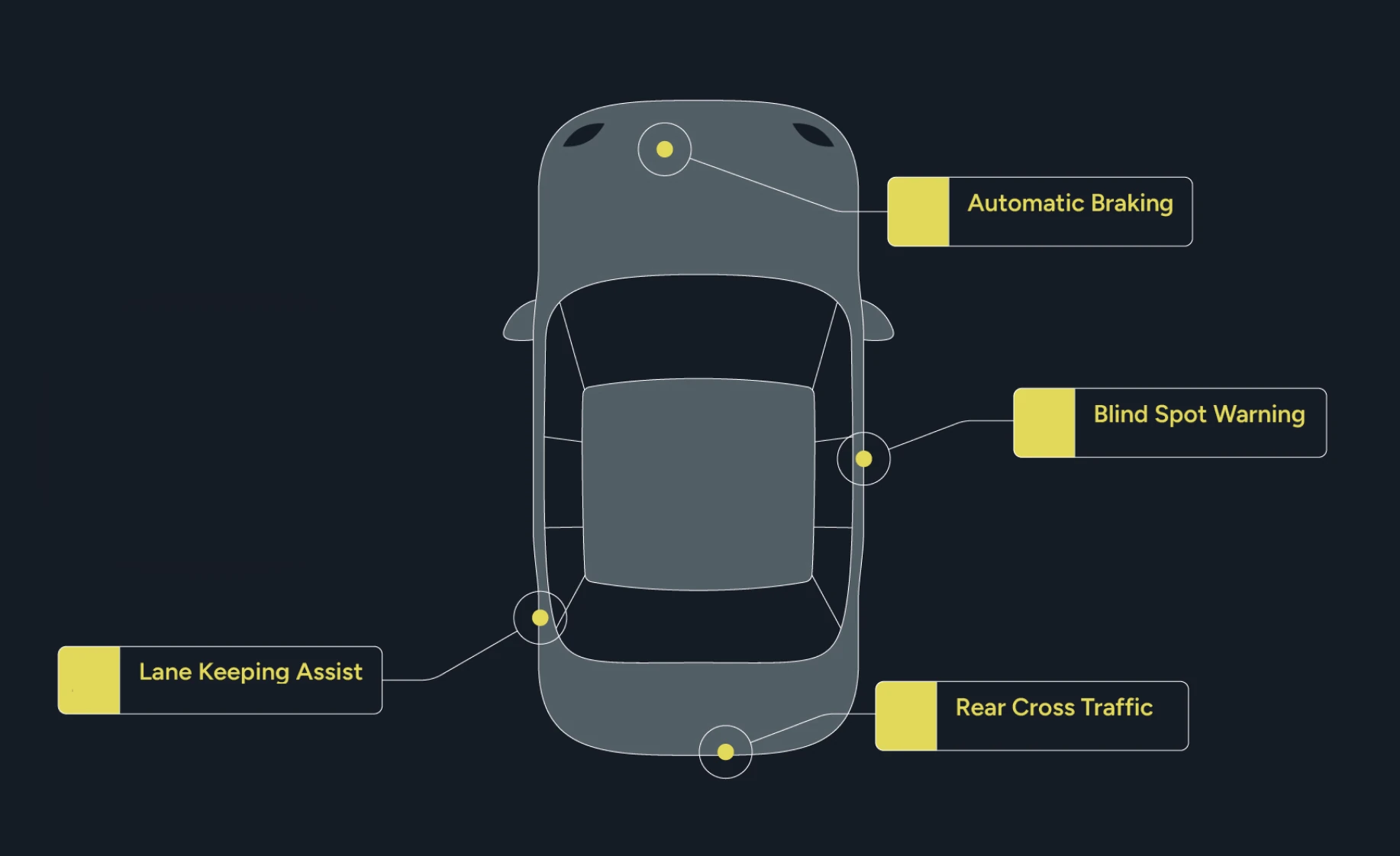
These systems work as one ecosystem. If even one is slightly off, it can affect how the others perform. That context helps customers understand why a service that seems unrelated to their safety features may still require a calibration.
Calibration triggers
Common services can require recalibration
Customers often don't realize that routine services can affect ADAS sensors.
Your team should be prepared to explain that repairs and maintenance can shift a sensor's aim, even when the work has nothing to do with the sensor itself.
Services that commonly trigger a calibration requirement:
Your team should be prepared to explain that repairs and maintenance can shift a sensor's aim, even when the work has nothing to do with the sensor itself.
Services that commonly trigger a calibration requirement:
- Windshield replacement
- Wheel alignment or tire replacement
- Collision repairs, even minor fender benders
- Suspension repairs or modifications
- Side mirror replacement
- Bumper removal or replacement
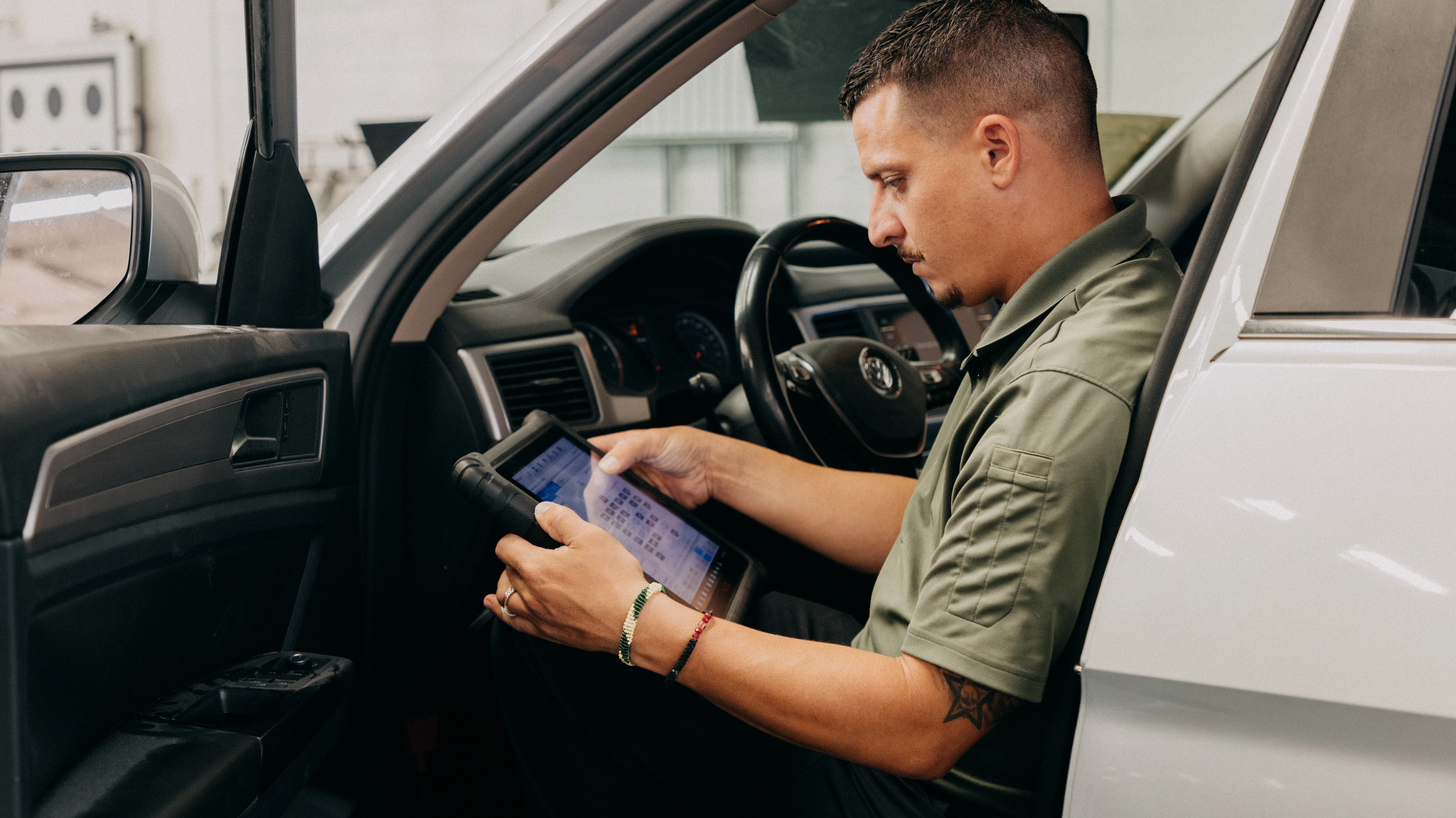
Calibration requirements vary by make, model, and the specific work performed. OEM procedures (not error codes) determine what needs to be done.
See FAQs
Precision
Why this matters when talking to customers
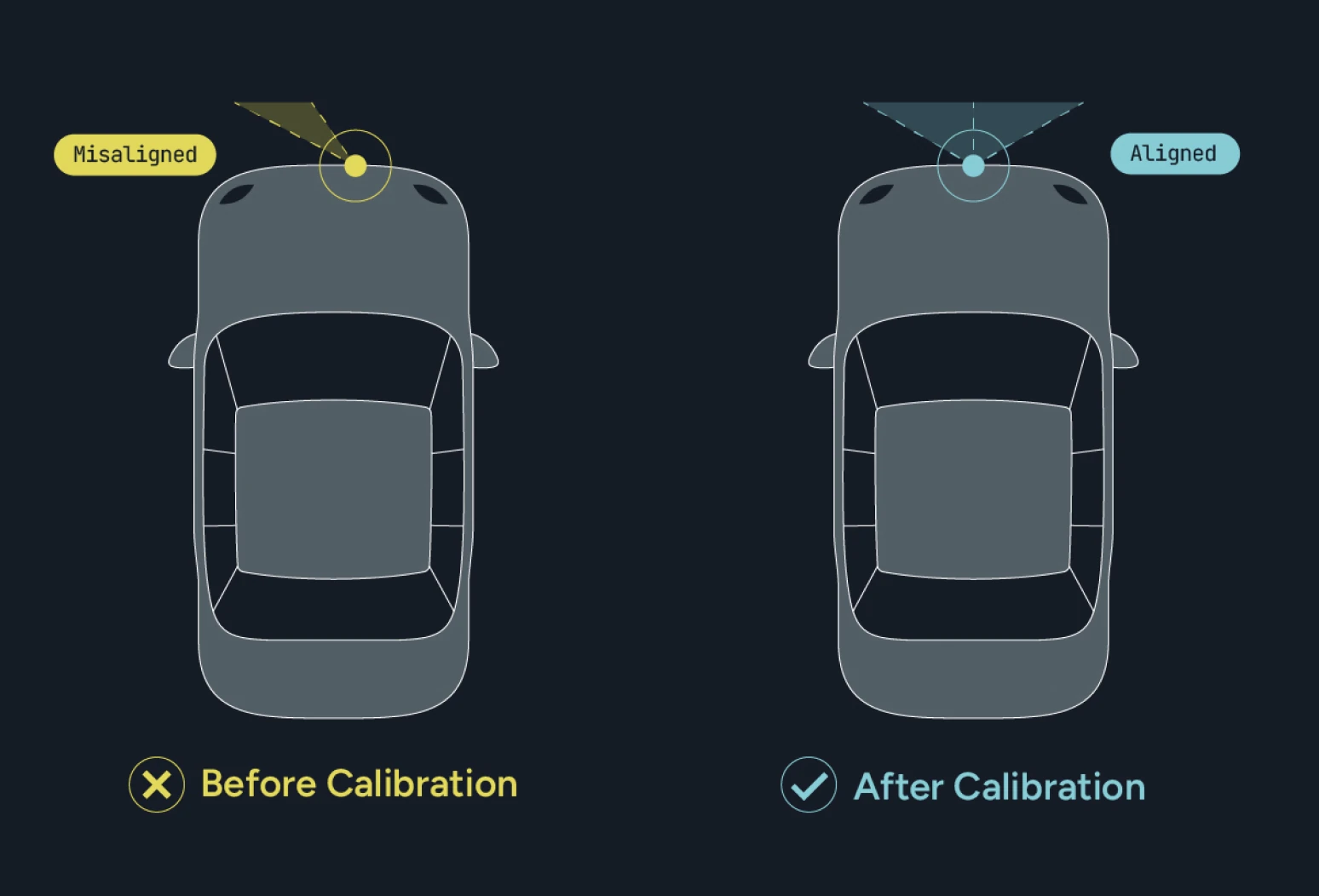
What can be helpful to frame the conversation is explaining that one degree off in a forward-facing sensor translates to a full foot of deviation at 60 feet and three feet at 180 feet.
At highway speeds, that is the difference between detecting an obstacle and missing it.
Their dashboard may not show a warning at all. Without calibration, it’s not clear whether or not the feature is working properly.
At highway speeds, that is the difference between detecting an obstacle and missing it.
Their dashboard may not show a warning at all. Without calibration, it’s not clear whether or not the feature is working properly.
Precision
Questions your team should be prepared to answer
When ADAS calibration comes up during service, customers tend to ask the same things.
Having consistent, confident answers builds trust and makes it easier to explain why the work is necessary.
Having consistent, confident answers builds trust and makes it easier to explain why the work is necessary.
- "What is ADAS and does my car have it?"
- "Why does my car need calibration after a tire alignment?"
- "Will my insurance cover this?"
- "How long will it take?"
- "What happens if I skip it?"
See FAQs
The most important reminder for your customers: your vehicle's safety features only work when they are properly calibrated. We bring up calibration with you because we take your safety seriously.
Free resources
Download printable resources
Shop Reference Sheet
A one-page guide your service advisors can keep at the front desk for quick ADAS talking points and answers to common customer questions.
A one-page guide your service advisors can keep at the front desk for quick ADAS talking points and answers to common customer questions.
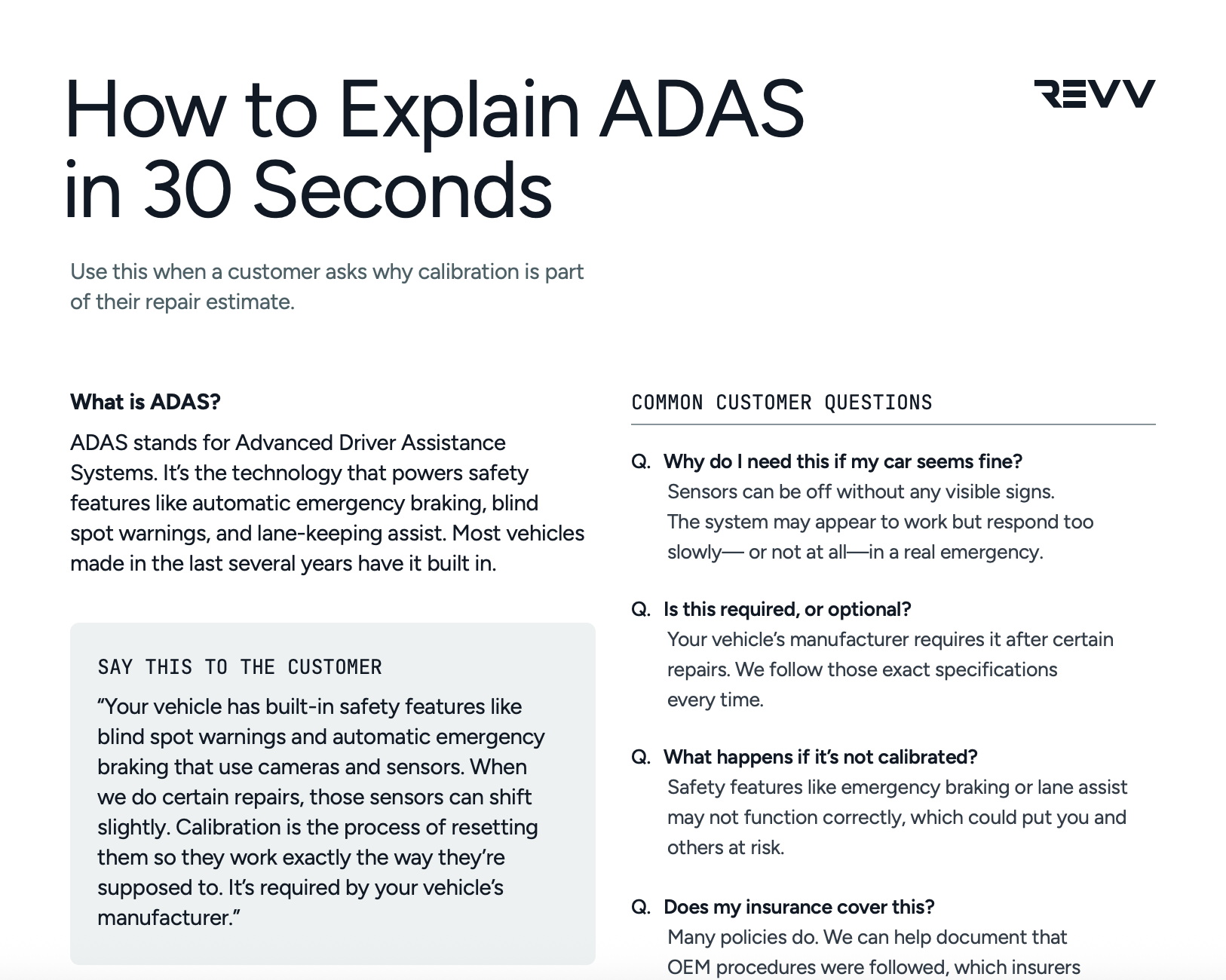
Customer Information Brochure
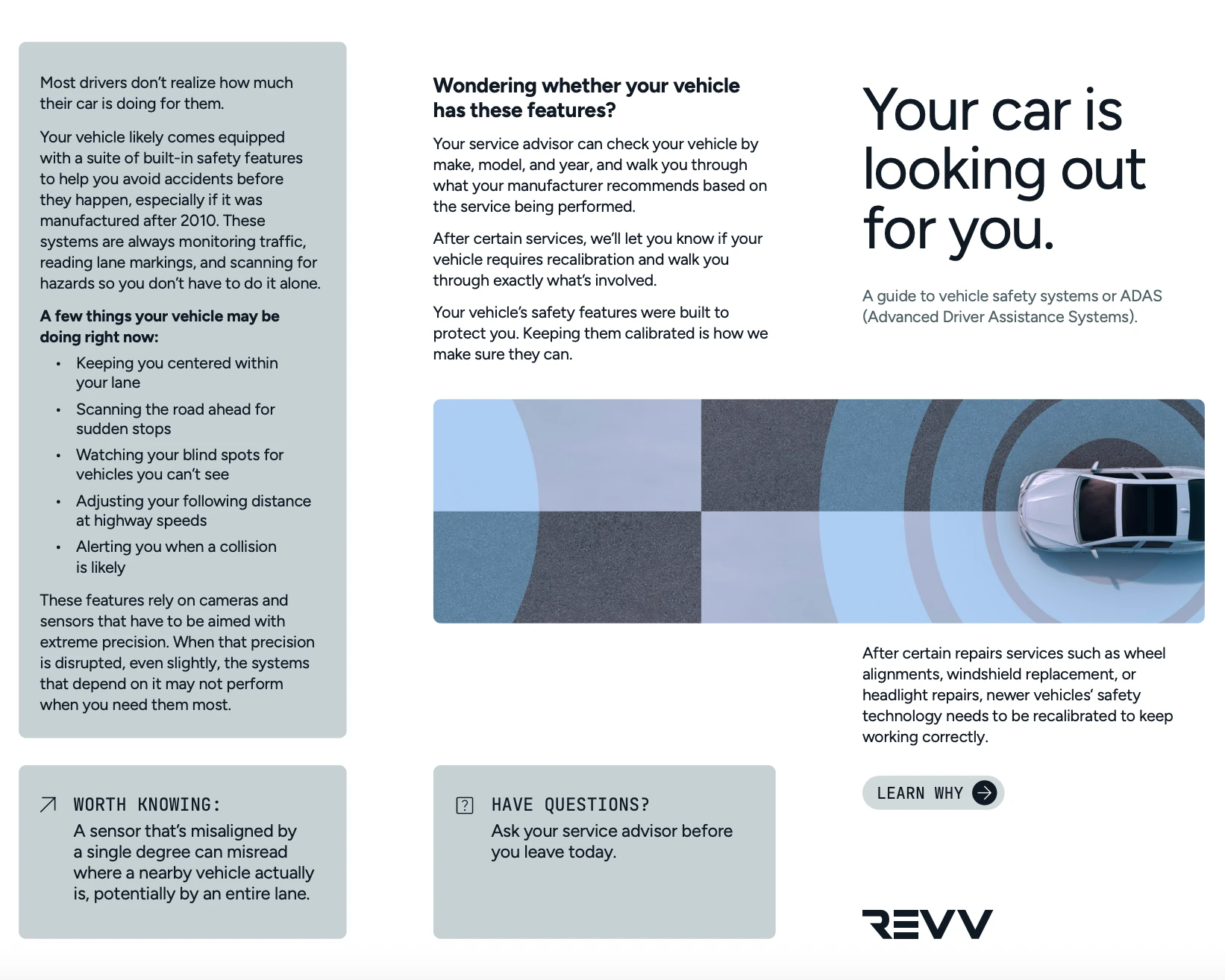
Print and hand this brochure to vehicle owners to help them understand their vehicle's safety systems and why calibration matters.
Print and hand this brochure to vehicle owners to help them understand their vehicle's safety systems and why calibration matters.
FAQs
Answers to the questions vehicle owners ask most about ADAS calibration, safety sensors, and what happens during and after common repairs.
What is ADAS and does my vehicle have it?
Test answerADAS stands for Advanced Driver Assistance Systems - safety features like automatic emergency braking, lane departure warnings, blind spot monitoring, and adaptive cruise control. If your vehicle was built after 2010, it likely has at least one. Over 90% of new vehicles sold today come equipped with them. Check your owner's manual or ask your service advisor.
What does calibration actually mean?
Calibration is the process of aligning and aiming the sensors and cameras that power your safety systems. If your safety features are the brain, calibration makes sure the eyes and ears are pointed in the right direction.
How do I know if my vehicle needs a calibration?
Calibration is required after specific types of service, not based on how the vehicle feels to drive. Common triggers include windshield replacement, wheel alignment, tire changes, collision repairs, suspension work, and bumper removal. Your service advisor can check what the manufacturer requires based on your vehicle and the work performed.
Will my dashboard show a warning if a sensor is misaligned?
Not always. A misaligned sensor may not trigger a warning light. The system can appear normal while its accuracy is compromised. Manufacturers base calibration requirements on the work performed, not on whether an error code is present.
Does insurance cover ADAS calibration?
Often yes, especially when calibration is part of a collision repair claim. Coverage varies by insurer and policy. Ask your adjuster or service advisor. For out-of-pocket services like windshield replacement or alignment, check with your service provider about cost and coverage.
How long does a calibration take?
Static calibration (performed indoors with targets) typically takes 30 minutes to an hour per system. Dynamic calibration (performed by driving the vehicle at specific speeds) may take longer. Some repairs require both. Your service advisor can estimate based on which systems need attention.
Can I drive my car if calibration is skipped?
The car will drive, but your safety systems may not work correctly. A sensor off by one degree can place a vehicle ahead in a different lane than where it actually is. If the vehicle is later sold, the next owner has no way of knowing the systems are compromised.
Does a tire change or alignment affect my sensors?
It can. Alignments change your vehicle's thrust angle. Tire size changes alter ride height. Both can shift what a camera or radar is aimed at. Requirements vary by make and model - your service advisor can confirm.
What is the difference between static and dynamic calibration?
Static is performed indoors using targets and fixtures. Dynamic requires driving on public roads at specific speeds so the system can recalibrate using real-world inputs like lane markings. The manufacturer's procedure determines which is needed. Some repairs require both.
