Table of Contents
I recall the first time that I encountered a vehicle equipped with Adaptive Cruise Control (ACC). I was on a road trip out west with a few buddies and to my surprise, the cruise control was able to adjust speed automatically based on surrounding traffic. I no longer needed to manually reset cruise control each time I hit the brakes. The system just slowed and accelerated on its own.
Between 2017 and 2023, ACC integration in new vehicles tripled from around 20% to 60%.
While engineers have made less work for drivers, many collision shops are struggling with the increased responsibility that comes with more sophisticated vehicles needing repair. It’s clear that the proliferation of advanced driver assistance systems (ADAS) have tasked the secondary collision market with the tall task of keeping pace with this boom in technological advancement.
This article tells you everything you need to know about Adaptive Cruise Control (ACC). Below you will learn how ACC works, key differences among manufacturer-specific systems, and common calibration needs and triggers.
What is Adaptive Cruise Control (ACC) and how does it work
ACC automatically adjusts a vehicle’s speed to match the flow of traffic and maintain a safe following distance. ACC is designed for highway driving, as it is able to automatically apply the brakes when there is a vehicle ahead, and also accelerate to the set speed when the road ahead is clear.
While ACC alone is not considered fully autonomous, it is a huge leap towards it. ACC is considered Level 1 driver automation, meaning it controls one of either steering or speed. ACC can be paired with other ADAS features, such as lane keep systems like Lane Departure Warning (LDW), Lane Centering, and Lane Keep Assist (LKA) which is a move towards Level 2 automation, yet not considered fully autonomous because the driver must still keep their hands on the wheel and pay full attention to the road.
Whether ACC has improved safety is a mixed bag. Proponents claim this feature improves safe following distance. Some claim that it creates a false sense of security for drivers resulting in less focus on the road. Other opponents of ACC claim that even ACC paired with Autonomous Emergency Braking (AEB) is not enough to reduce collisions when changing quickly from high speeds. Despite the contrasting views, ACC is not going away, it is likely to be improved upon and more highly integrated..
Key differences in ACC among manufacturers
Not all ACC systems are produced the same, let’s take a look at how some auto manufacturers deploy ACC in their vehicles. Plus, as any collision tech will tell you: there’s no uniformity between manufacturers. While it is frustrating at times, just knowing minor differences can save you a ton of time.
From functionality to placement of sensors, keeping your staff educated on the ins and outs of ACC variance across the industry is vital. Below are some examples of the variations of ACC systems by manufacturer.
Ford Adaptive Cruise Control
Ford’s ACC, depending on the model, is highly integrated with other ADAS features. Among all models, ACC can only function at speeds higher than 20 mph. It is engaged by selecting the correct mode on the steering wheel, as you can choose the classic or adaptive cruise control.
With the variance in Ford models, there are higher levels of ADAS integration with ACC available. There is ACC with Stop and Go, where the car can come to a stop and start again without driver input. There is also the ability to pair with Lane Centering, a type of Lane Keep Assist (LKA), to help the driver with steering while in ACC.
Ford has also launched Intelligent ACC which can recognize traffic signs, such as speed limit signs, and adjust speed accordingly.
Chrysler Adaptive Cruise Control with Stop and Go
Similar to Ford, Chrysler has been increasing investment in driver safety systems and is moving to make ACC with Stop and Go the standard in all of its new vehicles. From 0 mph to high speeds, this feature is able to keep a close following distance, stop the vehicle if needed, and accelerate again. This is very similar to how Traffic Jam Assist (TJA), but encompasses both low and high speeds, and the driver will need to hit “resume” if the vehicle is stopped for more than a few seconds.
This system uses radar sensors, much like other manufacturers to judge distances, which are placed behind the grill. The driver, using the related buttons on the steering wheel, chooses a desired following distance as opposed to a specific speed. If there are no cars ahead, then the user can opt for a specified speed as typical with a normal cruise control.
Toyota Safety Sense Technologies
As part of a wider package of available ADAS features, Toyota offers both typical ACC and what it calls Full-Range ACC. The Full-Range ACC functions similar to Ford and Chrysler’s Stop and Go features but varies slightly. With Full-Range ACC, an input from the driver on the gas pedal is needed to move the car and reengage the ACC. If the specific Toyota is already equipped with Road Sign Assist (RSA), Full-Range ACC will then change speeds accordingly, similar to Ford’s Intelligent ACC.
These are only a few examples of subtle differences among three car brands when it comes to ACC. Even within the same company there are differences in ACC packages. Always verify which type of ACC is equipped on the car currently in your bay before proceeding with any service. OEMs will likely be different based on which exact system is equipped.
How ACC integrates with other ADAS features
Adaptive Cruise Control is one of the more versatile and integratable ADAS systems out there. It is likely that higher levels of automation are going to use ACC as a starting point.
As highlighted by manufacturer specializations above, ACC is often tied in with different ADAS systems. It is common to see ACC paired with Lane Keep Assist (LKA) or Lane Centering systems to help the driver with both steering and accelerating. This specific pair brings a vehicle close to Level 2 automation, but still requires care from the driver.
ACC is also often equipped with Autonomous Emergency Braking (AEB) in the case of near accidents. ACC uses very similar technology to Forward Collision Warning (FCW) which both use front facing radars. This technology helps maintain safe following distances and can alert the driver or apply the brakes if necessary.
Adaptive Cruise Control is perhaps the most closely related to Traffic Jam Assist (TJA) but there are clear and important differences. Read on to understand these differences.
Difference between ACC and Traffic Jam Assist (TJA)
While ACC and TJA seem to be identical systems, this couldn’t be further from the truth. While they both aim to aid the driver in accelerating and braking, their intended and actual function are widely different. Let’s first take a look at the similarities to understand why some shops may treat these systems the same.
Similarities between ACC and TJA include:
- Automated accelerating and braking
- Reliance on front-mounted radar sensors (or laser distance sensors in some models)
- May both be integrated with the same ADAS features such as LKA, LDW, FCW, Lane Centering, and Blind Spot Monitoring (BSM)
Admittedly, these are striking similarities, but let's look at differences that matter to your shop. These include:
- TJA is only designed for stop and go traffic, only functioning at speeds below 40 mph, whereas ACC typically operates above 20 mph
- TJA does not rely on driver input to move forward after a stop, classic ACC disengages when the driver hits the brakes, and if is a Stop and Go ACC system, will require some input from the driver after the car stops
- Standard TJA maintains control of steering while ACC typically does not, unless paired with another ADAS system like LKA
Understanding these differences is vital to your shop’s success. Identifying what exactly is equipped is the first step in ADAS calibration. Let’s move on to what you need to know about common ACC calibrations.
When and why ACC needs calibration
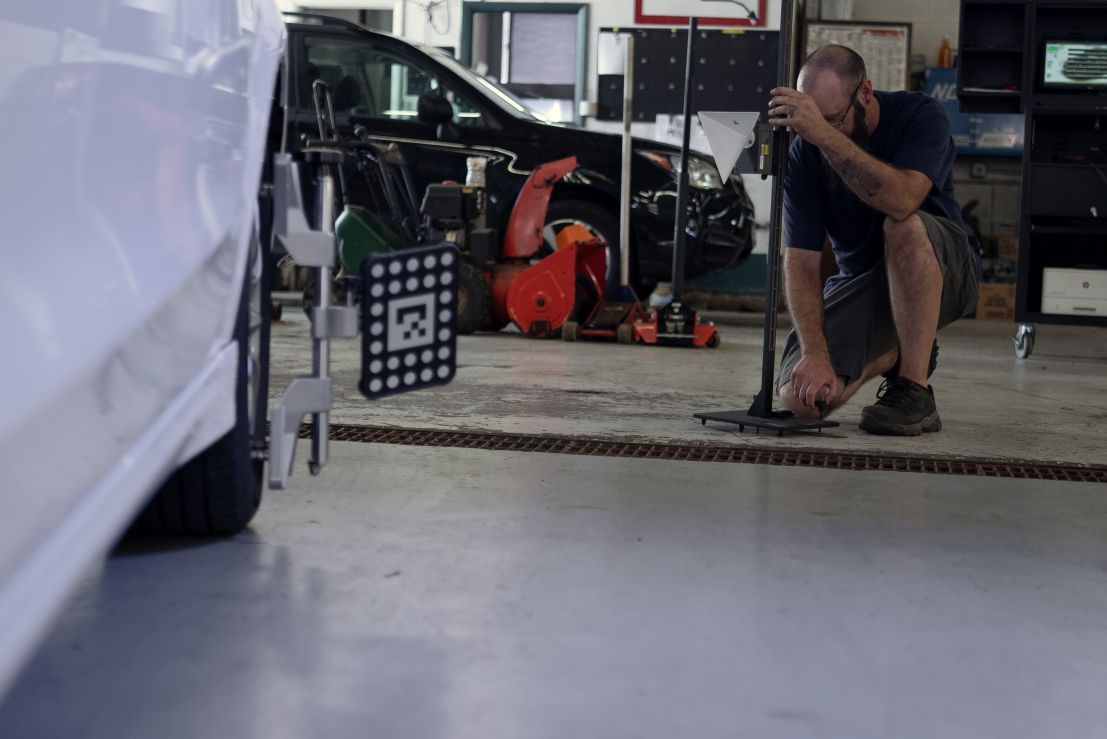
As typical ACC relies mainly on the radar sensors mounted at the front of the vehicle, it is good to know that these are often located behind the grill. These radar sensors are delicate and rely on specific heights and angle measurements, therefore suspension work or other services that may affect the ride height of the vehicle require ACC calibration.
Fender benders or front end collisions also warrant ACC calibration.
When ACC is paired with other features such as any steering assistance systems, then work to the sides of vehicles, such as quarter panel repair, may require you to calibrate ACC.
Static and dynamic calibration considerations
While you want your techs to verify ride height and angles of the necessary sensors via static methods, it’s important to note that OEMs likely require you to run dynamic tests as well. Dynamic calibrations may be more common with ACC systems integrated with RSA, it is still highly likely that you will need to run some calibration tests while the vehicle is in motion.
OEMs will have clear requirements of either static or dynamic calibrations to consider the job complete (and sometimes both). Be sure to check up on all the requirements for the specific vehicle in your shop.
How Revv helps you calibrating ACC and other ADAS systems
Each year, manufacturers are pouring millions of dollars into autonomous vehicle development, using their own ACC systems as a starting point. To keep your shop at the forefront of the aftermarket industry, secure more revenue, and improve customer safety and satisfaction, your techs should be well-versed in ACC technologies.
How sure are you that your shop is equipped to handle the continued surge in ADAS integration? With Revv, you can keep research time to a minimum while also gaining access to:
- Instant identification of required calibrations
- Detailed OEM procedures
- Comprehensive documentation tools
- The ability to seamlessly integrate into current workflows and with existing shop systems
Set up a call with our team and see how Revv ADAS can improve your shop by capturing more revenue and keeping your customers safe.