Table of Contents
The hesitation around buying ADAS calibration equipment rarely comes down to whether a shop can afford it. It comes down to a question most owners never actually run the numbers on: how long until this stops being a line item on a loan statement and starts showing up as margin?
“It depends” isn’t a good enough answer here. A vague sense that the equipment will “probably pay off eventually” pushes shops in one of two bad directions; either they delay a purchase that would have paid for itself in a matter of months, or they make the purchase and end up years behind the payoff timeline they’d imagined. Both mistakes come from skipping the same calculation.
This is a walkthrough of that calculation: the inputs that actually belong on each side of the equation, the formula itself, and the variable most shops leave out entirely, which often matters more than the price tag on the equipment.
What actually belongs on the cost side of the equation
The purchase price of ADAS calibration equipment is the number on the invoice, not the number that belongs in your break-even math. A complete cost picture includes:
- Equipment purchase price - the target boards, frames, and calibration hardware itself
- Space and setup requirements - bay mods, flooring, lighting, and floor space taken out of other use
- Tech training - time and cost to get staff certified and confident running calibrations independently
- OEM software and data subscriptions - the recurring access fees required to run procedures correctly across makes and models
- Ongoing maintenance and recalibration of the equipment - target boards and calibration frames need periodic verification and upkeep to stay within OEM tolerance
The last item is where a lot of break-even estimates quietly go wrong as it’s tempting to treat maintenance and subscription costs as a secondary concern. These costs, however, don’t pause while you’re calculating payoff; they run from day one, right alongside the investment.
Leaving them out of the initial math is exactly what makes a break-even estimate look better, and arrive sooner, than reality will deliver. The yearly maintenance costs on ADAS equipment are worth paying and you need to account for them in the number you’re using to judge the investment.
What actually belongs on the return side
The return on ADAS calibration equipment isn't just “what we’d otherwise hand to a sublet partner.” There are two things tacked together that you must keep in mind: the margin your shop keeps by doing the work in-house instead of paying someone else to do it, and the throughput gain from not having a vehicle sitting on someone else’s schedule.
To estimate this realistically, start with the margin difference between subletting a calibration and performing it yourself. That’s the per-job value. Multiply it by a realistic estimate of how many qualifying jobs come through your shop each month.
It’s tempting to project monthly volume based on a good month, but staying realistic is important. Use the conservative number instead, such as your average. An optimistic volume estimate is the second most common way a break-even calculation ends up wrong (right behind ignoring ongoing costs). Both sides of the formula are now concrete: what the equipment costs, and what each job is actually worth.
How to run the actual formula on your own numbers
Here’s the actual formula to calculate your break-even point:
Break-even (in jobs) = Total investment ÷ Per-job margin gained by bringing the work in-house
Total investment is everything from the cost section above, including equipment, setup, training, and first-year subscriptions and maintenance all added together.
Once you have that number, divide it by your realistic monthly job volume to get a timeline in months:
Break-even (in months) = Break-even (in jobs) ÷ Realistic monthly volume
A worked example (Plug in your own numbers here):
- Total investment: $45,000
- Per-job margin gained by doing the work in-house: $150
- Break-even (in jobs): $45,000 ÷ $150 = 300 jobs
- Realistic monthly volume: 25 qualifying jobs/month
- Break-even (in months): 300 ÷ 25 = 12 months
A shop with the same investment but 15 jobs a month is looking at 20 months, whereas a shop with 40 jobs a month is looking at 7.5 months. The equipment doesn’t change, rather the volume and per-job margin do all the work.
Mobile vs. In-bay equipment: a different break-even profile
Mobile and in-bay ADAS diagnostic equipment carry fundamentally different cost structures and throughput ceilings, and that shifts the break-even math in different directions depending on your shop.
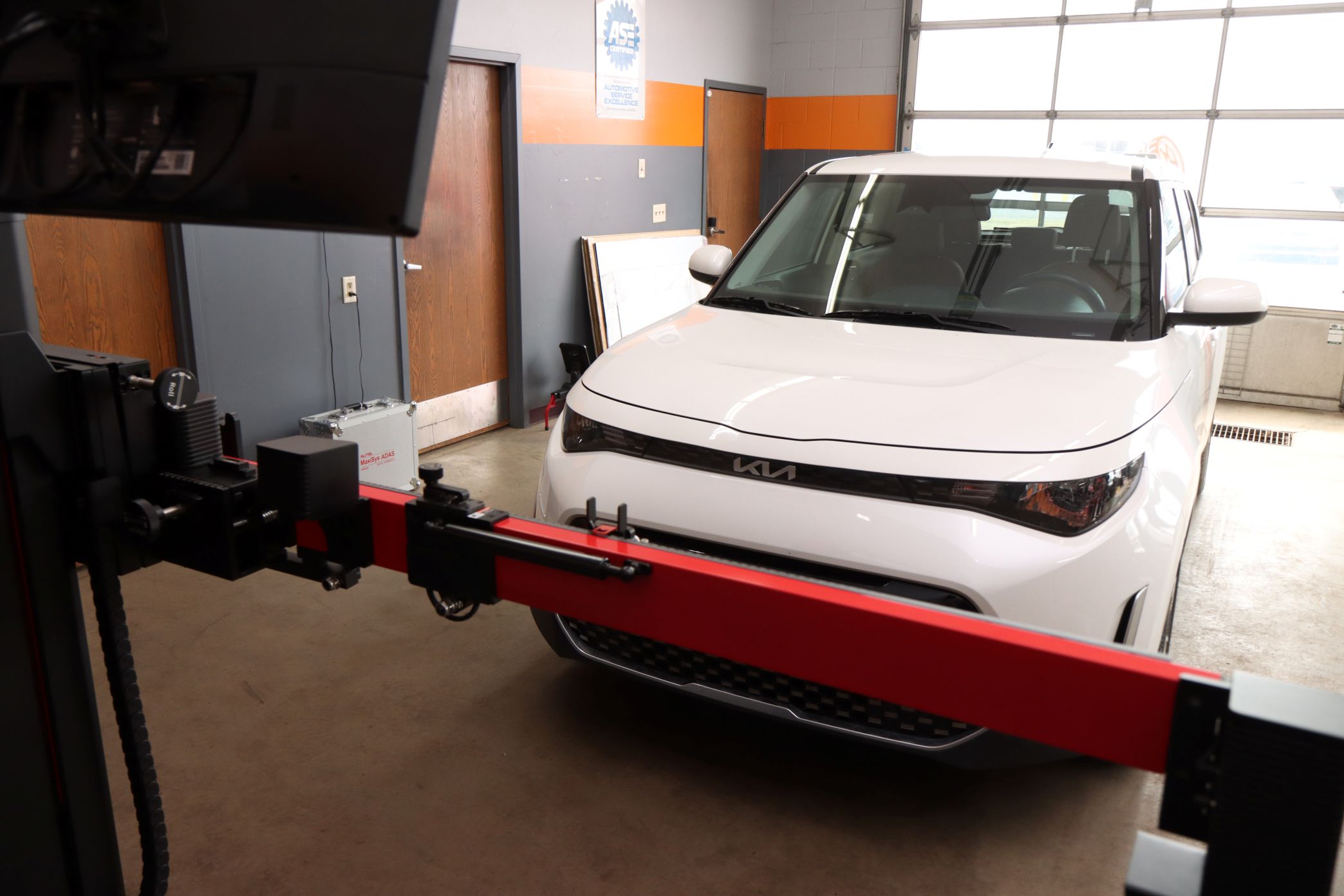
Mobile ADAS calibration equipment typically requires less dedicated space and can lower certain fixed costs associated with bay reconfiguration and permanent target board setup. It also adds flexibility: the equipment (and the tech running it) can move to where the vehicle is, rather than requiring every vehicle to be routed through one fixed bay.
In-bay equipment tends to trade that flexibility for throughput. A dedicated, pre-configured bay can often move through jobs faster once a vehicle is in place, without setup and teardown time repeated at each new location. Mobile setups carry travel and scheduling overhead per jon that an in-bay setup doesn’t, such as time between locations that isn’t billable, and coordination that a fixed bay schedule doesn’t require.
The two also age differently as equipment that travels is subject to more handling and environmental variation, which can affect how often it needs recalibration and verification against OEM tolerances, compared to a stationary setup ina controlled bay environment.
Neither profile is universally better, it depends on your space constraints, your job mix, and how much of oyur ADAS work is walk-in versus schedulable. If you’re comparing specific price points or throughput figures between mobile and in-bay options, verify them against current vendor quotes for your market; those numbers move and vary enough by vendor that they’re worth confirming rather than assuming.
The hidden variable that changes your break-even timeline
Here’s the piece that most break-even estimates miss entirely: the equipment’s raw capacity isnt’t what determines how many jobs actually flow through it in a given month. What determines that is how much non-calibration time surrounds each job like researching what a specific vehicle needs, confirming the correct OEM procedure, and producing documentation afterward for insurance and liability purposes.
Two shops with the identical equipment, purchased at the identical price, can land on very different break-even timelines based on this variable alone. If a tech spends thirty minutes on research and paperwork for every thirty minutes of actual calibration work, the equipment’s real throughput is half of what it looks like on paper. This causes the break-even point to stretch accordingly.
This is exactly the time that Revv is built to shrink. VIN-specific OEM requirement lookups and auto-generated documentation take the research-and-confirmation work and the after-the-fact paperwork out of the technician’s hands, so more of the day is spent on calibrations that actually move through the equipment.
Shops that reduce the research-and-documentation time around each calibration typically find their equipment reaches break-even faster because more jobs clear the bay in the same window.
Running the numbers
Break-even on ADAS calibration equipment isn’t a mystery figure that depends on luck or market conditions outside your control. It's a calculation any shop can run today with three inputs it already has access to. For shops with steady volume, the actual timeline is often shorter than the sticker price makes it feel.
Revv doesn;t change that math, but it does help more qualified jobs move through the equipment investment you’ve already made, by cutting the research and documentation time that otherwise eats into your throughput, shortening the distance between the purchase and the payoff.
Set up a call with Revv to see how you can reach your break-even point sooner.
FAQs
Q: How do you calculate the break-even point on ADAS calibration equipment?
Divide your total investment (equipment, setup, training, and first-year subscriptions and maintenance) by the per-job margin you gain from doing the work in-house. That gives you the number of jobs needed to break even, which you can then map to your expected monthly volume for a timeline.
Q: When does investing in ADAS calibration equipment actually pay off?
It depends on volume and per-job margin more than the price tag itself. A shop with steady ADAS-related volume often reaches break-even faster than the upfront cost would suggest, while low or inconsistent volume extends the timeline regardless of how capable the equipment is.
Q: Is mobile ADAS calibration equipment a good investment compared to in-bay equipment?
It depends on the shop's space, scheduling flexibility, and typical job mix. Mobile setups can lower some costs and add flexibility, but may carry different throughput and overhead trade-offs worth weighing against an in-bay setup's profile.
Q: Are the ongoing maintenance and subscription costs of ADAS calibration equipment worth it?
Yes, when they're factored into the break-even calculation from the start. Leaving them out doesn't make them go away, it just makes the eventual timeline longer than the original estimate suggested.
Q: What's the biggest factor that changes how fast equipment reaches break-even?
Realistic monthly job volume and, less obviously, how much non-calibration time (research, requirement confirmation, documentation) surrounds each job, since that determines how many jobs can actually move through the equipment in a given period.
Q: How can a shop shorten the break-even timeline on calibration equipment?
Increase the number of qualified jobs that move through the equipment in the same window. This often comes down to reducing the research and documentation time around each job as much as increasing raw equipment capacity.
.jpg)