Table of Contents
Over half a million collisions are caused by lane changing occur every year, accounting for 10% of all crashes.
While Lane Change Assist (LCA), and more advanced Active LCA systems are designed to make drivers’ lives easier, it can create a headache for your shop.
This article tells you everything you need to know about LCA systems, including the difference between traditional and Active LCA, how they work, differences among manufacturers, integration with other ADAS features, and calibration scenarios.
What is Lane Change Assist (LCA) and how does it work
Lane Change Assist (LCA) is an ADAS feature that warns drivers when switching lanes of any oncoming or hidden vehicles. When a driver uses the turn signal, LCA activates and monitors for vehicles in the desired lane. If one is spotted, LCA then alerts the driver with visual, physical, and/or auditory alerts.
This system uses radar or ultrasonic sensors located on the sides of the vehicles to detect any obstacles. The sensors share information with the vehicle’s central computer and relay the message with the driver via the visual or auditory warnings, typically emitting from the dash or rear view mirrors. In some cases, feedback might come in the form of vibrations in the steering wheel or the driver seat.
While original models ofLCA provides a warning, Active Lane Change Assist is more sophisticated. Let’s look at the differences between these two systems.
Active Lane Change Assist vs Lane Change Assist (LCA)
The original form of LCA is a highly useful safety feature that warns drivers of potential road hazards when changing lanes, but provides no further assistance. On the other hand, Active LCA is more integrated with the function of the vehicle overall and offers more control and less driver input. Active LCA provides a warning, but can also steer the car back into the original lane if it senses that the lane change is unsafe.
With the vast difference in capabilities, it’s important that whether your techs are dealing with standard LCA or Active, they’re aware of what ADAS features are onboard. Both are highly integrated with other ADAS features and require acute detail to any related sensors, namely side-installed radars.
Additionally, there are smaller subtleties among how manufacturers employ their own LCA systems.
How some manufacturers differ in their Lane Change Assist systems
Perhaps of all ADAS features, LCA systems are among the most variable in terms of difference between manufacturers and even models of the same trim. This is because they are often paired with other ADAS features such as Blind Spot Monitoring (BSM), Lane Departure Warning (LDW), and others.
Below are some examples of how LCA systems can potentially look between a few different manufacturers.
Chevrolet Lane Change Alert with Side Blind Zone Alert
Installed in most Chevy vehicles 2016 or newer, Chevrolet uses hidden radar sensors in the rear corners of the vehicle to provide alerts when there are vehicles in the adjacent lanes. This is a two-fold program as Chevy integrates a LCA system with its Blind Spot Monitoring (BSM) system. Therefore, this provides visual alerts if there is a car currently in the driver’s blindspot via a light on the sideview mirror, and the same alert will pop up when a fast approaching vehicle is in the lane that the driver indicates they’re turning into.
Neither system provides auditory alerts, nor can they take control of the vehicle’s sterling, braking, or acceleration. These systems can also be turned off by the driver.
Ford BlueCruise
Ford BlueCruise essentially blends Active LCA with Adaptive Cruise Control (ACC), Lane Departure Warning (LDW), and Lane Centering technologies.
With just the touch of a button to activate BlueCruise, all these systems work together to create a near-Level 2 autonomous experience for the driver. This system can work independent of Lane Keeping or together, working to steer, accelerate, and apply the brakes.
This can keep the car centered, change lanes on its own, stop the vehicle, all while operating in cruise control.
Volkswagen Travel Assist
Similar to Ford, Volkswagen integrates its LCA system into a wider safety package that includes Park Assist, ACC, and more. Specifically, it’s paired with Side Assist and Park Assist This allows for assisted lane changing from approximately 40 mph and up. Moreover, this feature can also take control of the vehicle as well, steering the vehicle back into a lane, or to a complete stop on the shoulder while activating the hazard lights and even honking the horn if needed.
These three leading auto manufacturers all have very different LCA systems, ranging from mere warnings to near full automation.
How Lane Change Assist interacts with other ADAS features
Depending on the make, model, and year, knowing what is affected by and what affects LCA systems can be challenging, but is vital to know
The most typical pairing for LCA systems is a Lane Keep Assist (LKA), Lane Departure Warning (LDW), or Lane Centering system. These systems use the same sensors and are adjacent functions. BSM is also a common feature that may share the same warnings as an LCA system, but it is important to note that there are differences between the two.
Additionally, LCA tends to be paired with ACC in many cases, as these two types of features bring a vehicle closer to Level 2 autonomous capabilities.
Understanding that LCA systems are almost never standalone is vital to knowing how service to one may impact the other, or calibrating LCA may impact other features.
Lane Change Assist vs Blind Spot Monitoring (BSM)
While both LCA and BSM scan for potential hazards in adjacent lanes, they often function differently.
The main difference is when these systems are activated. LCA only begins to scan for vehicles in only the desired lane once the driver activates the turn signal. In contrast, BSM is constantly monitoring both adjacent lanes at all times.
BSM only serves as a warning to drivers without the ability to take control of the vehicle. BasicLCA also serves as only a warning, but as previously mentioned, Active LCA can control the vehicle if needed.
These are vital differences that are important when conducting calibrations. Understanding these can help techs when choosing between the correct static and dynamic calibration strategies.
Lane Change Assist calibration needs
Like any ADAS feature, LCA requires unique calibration care to function as intended. Your shop could be held liable if a calibration is performed incorrectly, incompletely, or altogether missed.
With LCA systems specifically, there are likely sensors located in the quarter panel on each side of the vehicle or the bumper but placement may vary depending on make and model. These sensors are very fragile and require exact vehicle geometry, such as ride height and angles. Because of placement and the function of the sensors, calibration is needed following any of the following:
- Collisions that affect side or quarter panels
- Suspension work
- Wheel alignment
- Any service to the sensors
This is not an exhaustive list of the services that LCA calibration will be needed for, it is always vital to check OEM requirements for the full picture of LCA needs.
Static vs dynamic calibration considerations
Because of the nature of these systems, at the very least a road verification test will be needed to see if you correctly calibrated the system.
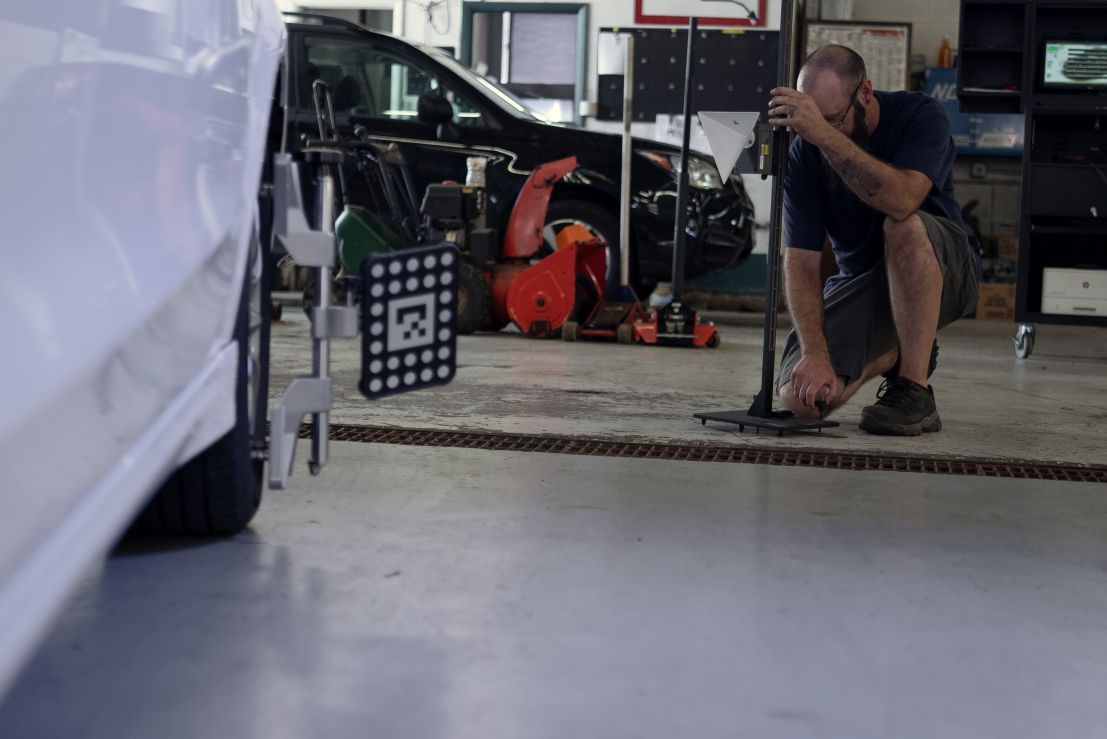
Static calibration practices for this ADAS system would include using an ADAS calibration target board to ensure the correct angel and height measurements. This brings about specific environmental needs in your shop, such as a level working surface and more.
Dynamic practices when calibrating these systems are a bit more complex. This would typically include a road test that either helps in self-calibration for more advanced systems, or verification of correct calibration.
Whatever your strategy, ensure it follows OEM recommendations, this will save you time and headaches from potential redos.
How Revv streamlines your ADAS calibration process and captures your shop more revenue
Each year, manufacturers are pouring millions of dollars into autonomous vehicle development, focusing on features such as LCA, ACC, and Road Sign Recognition systems. Revv keeps your shop at the forefront of the aftermarket industry, helping capture more revenue, and improving your customer safety and satisfaction.
With Revv, you will have access to:
- Instant identification of required calibrations on any make and model
- Simple yet detailed OEM procedures
- Comprehensive auto-documentation tools
- The ability to seamlessly integrate into current workflows and with existing shop systems
This way your technicians can focus on calibrating LCA systems without headaches that come with excessive time spent looking up OEM requirements. Set up a call with our team and see how Revv can improve your shop by capturing more revenue and keeping your customers safe.