Table of Contents
ADAS features are increasingly complex, with features likely using more than just a single sensor. As a result, there is increasing OEM reliance on these complex multi-sensor systems where cameras, radars, LiDAR, ultrasonics, and more all must work in sync to be fully operational.
Sensor fusion has transformed simple calibrations into multi-layered diagnostic jobs that require precision and verifiable procedures. Let’s discuss what it means for your shop and the future of ADAS calibrations.
What exactly is sensor fusion?
Sensor fusion is the merging of data from numerous different sensors, creating an accurate model of the driving environment.
While older ADAS features typically relied on a one sensor to one output ratio, modern ADAS is more integrated with other systems. Multiple sensors “share” information to produce higher levels of vehicular output.
Sensor fusion doesn’t change the function of a radar or any other sensor. Instead, it changes how that data is used. It improves performance of all ADAS features, but also creates the reliance on the proper function of each facet. Because of this reliance, precise calibration and care is needed for each component, even more so than in the past.
For example, on older ADAS equipped models, a Forward Collision Warning (FCW) system may just rely on one front-mounted radar and provide a warning to a driver. But today, a FCW system can be integrated with Adaptive Cruise Control (ACC), Autonomous Emergency Braking (AEB), and other systems.
This means that the cooperation between more than just one sensor (such as the ultrasonic and cameras used by the ACC in addition to radar) need to work in unison to provide numerous outputs (such as the warning, deceleration, or applying the brakes).
Different levels of sensor fusion currently include:
- Low-level fusion: Solely merges data, such as creating 3D point clouds with radars and cameras without identifying exact objects
- Mid-level fusion: Fuses data from different sensors to identify specific objects, their position, and speed
- High-level fusion: Fuses data and to make predictions of the potential paths of objects
The core sensors and their functions
It is important to know the main types of sensors and how they fit into the trend of sensor fusion. Let’s discuss each.
- Cameras
- These sensors can detect objects, lanes, signs, traffic signals, color, and more depending on their age and quality
- Some limitations include glare, low light, or poor weather
- Emerging trends include stereo cameras and neural-network-based perception which incorporate AI
- Radar
- These sensors are very good at detecting the distance, velocity, and path of objects
- Some limitations may include resolution or difficulty distinguishing object types
- These sensors perform well in poor weather and at a long distance
- LiDAR
- These sensors produce high-resolution 3D depth maps
- Limitations can include high cost and contamination sensitivity
- These perform well for localization and free-space detection, yet OEMs have been learning toward cameras
- Ultrasonic Sensors
- These sensors have short-range and low-speed precision which are ideal for parking lot related features (such as Parking Assist or Rear Cross Traffic Alert)
- Their function is also their limitation as they only perform well at short distances and low speeds
There are additional sensors that you need to keep in mind, depending on the vehicle in question. Systems like lane keeping and stability control depend on accurate data from sensors throughout the vehicle. A misaligned or uncalibrated yaw rate or steering angle sensor can compromise the whole picture.
V2X (Vehicle-to-Everything) inputs are also expanding sensor fusion beyond onboard sensors, adding predictive perception before objects are even visible.
How does sensor fusion work?
So you know what sensor fusion means, but how does it actually work?
Knowing how sensor fusion functions from detection to action is vital for your technicians to know when servicing any ADAS features. Let’s break down each stage of sensor fusion:
- Detection: In the detection stage, the sensors collect raw data. This is the actual function point where radars and cameras detect lane boundaries, objects, road signs and more.
- Segmentation: Here, sensor data is read and grouped by the ECUs into clusters. These clusters can represent potential objects or features. Data segmentation helps reduce false positives in ADAS warnings.
- Classification: Computers or learning models then identify the object type from these clusters. This differentiates pedestrians, vehicles, signs, debris, and more.
- Tracking and Monitoring: Now the objects are tracked over time, helping the vehicle to build situational awareness and anticipate hazardous trajectories.
- Decision Logic: In this step, the ADAS system chooses an action based on the compiled and analyzed data. Here, braking, steering, warning, or nothing is enacted.
This is why the sensitivity of calibration is a must. A single missed calibration can result in the malfunction of the entire system of sensor fusion.
Why sensor fusion makes ADAS calibration more complex, and therefore, more critical
Now that these sensors are now sharing all of their data, problems arise.
Interdependence
Just one miscalibrated sensor can lead to a degradation in fusion logic. This means that a miscalibrated camera can have negative impacts on the readings of a perfectly calibrated radar. This is due to the fact that raw data mismatches may cause the computer to fail to understand which sensor is “telling the truth.”
Fusion amplifies errors, meaning that small sensor misalignments can cause larger mistakes with perception.
More calibration points and needs
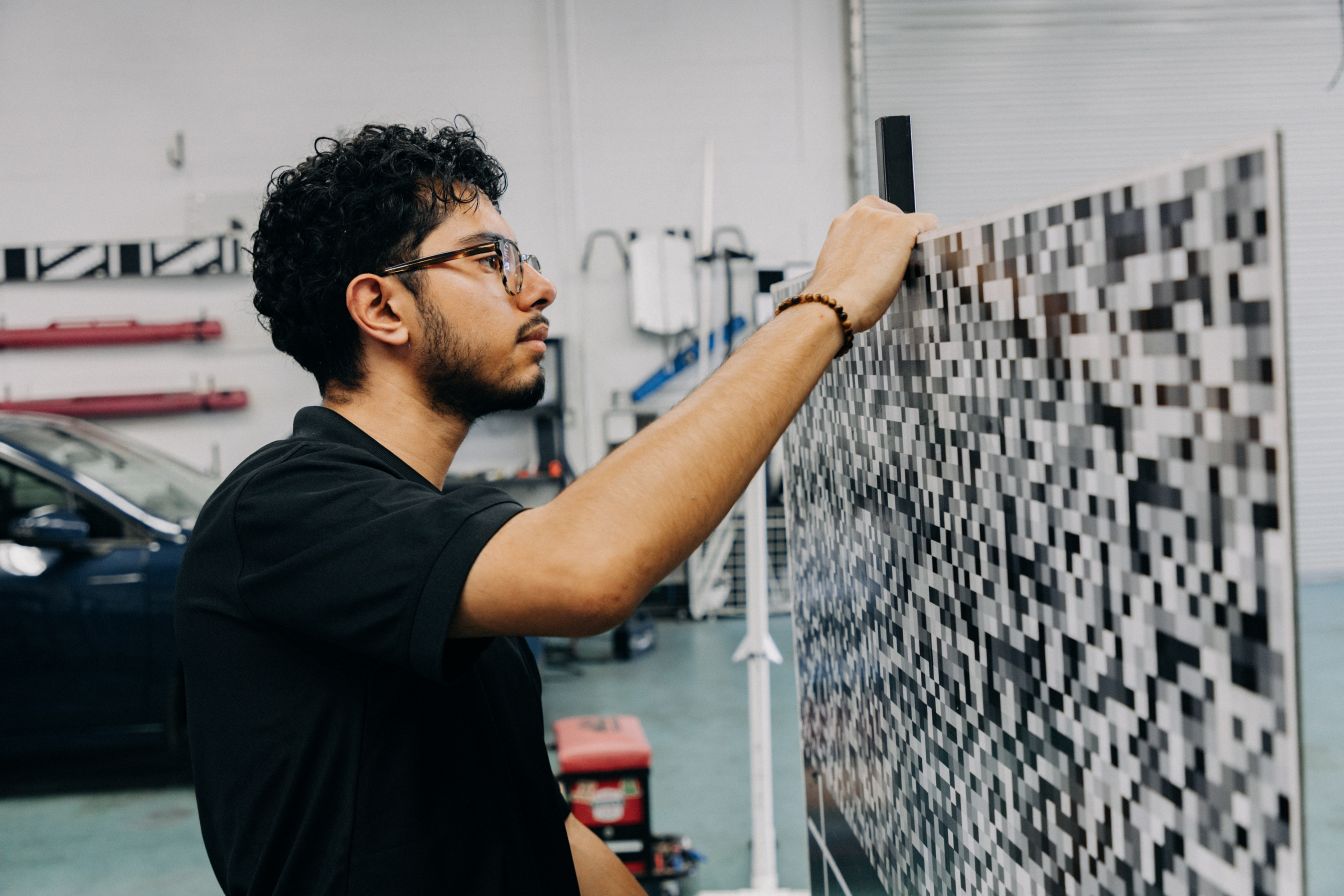
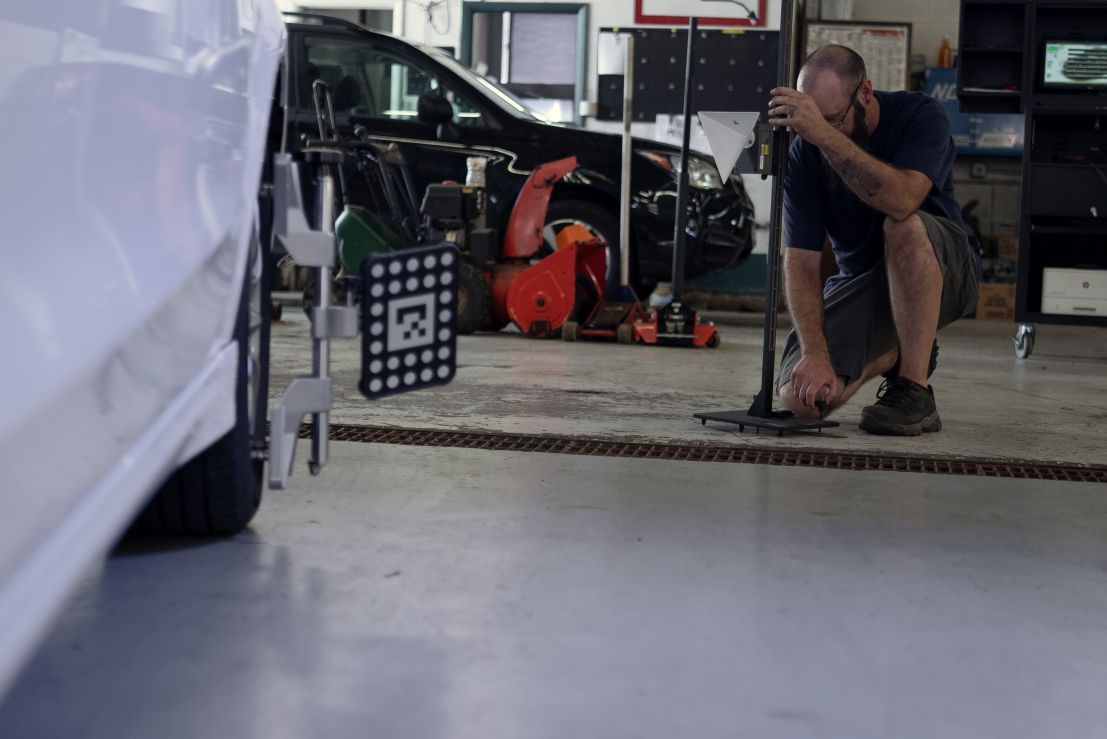
Long gone are the simple “one feature, one sensor” calibration days. Now, systems are multi-sensor projects, requiring multiple target boards, precise alignment tools, and cooperative positioning.
The more ADAS features and shared sensors means more calibration triggers for your shop. Collisions, windshield replacement, suspension repair, wheel alignments, software updates or even cosmetic repairs now are potential triggers for larger multi-sensor calibration projects.
Difficulty in knowing what’s on board the vehicle
Because of the increase in sensor fusion, VIN-accurate calibration is essential to identify exactly what your shop needs to calibrate.
OEMs already vary widely and change rapidly in required procedures, tools, and environmental conditions. Now, you should expect these OEMs to be even more varied. Incorrect steps or incomplete knowledge can void your OEM compliance and expose your shop to liability concerns.
You need to eliminate guesswork and improve your shop's calibration procedures to capture more revenue, limit liability concerns, and keep your shop current with the times.
Sensor fusion and what it means for your calibration workflow
Dynamic and static calibration requirements will be increasingly affected.
What in the past may have required one strategy may now require both types of calibration.
Because these systems are going to work in sync, there will be initial static calibrations followed by dynamic calibrations to ensure everything is working together as intended. ADAS modules often recheck calibration continuously post-service.
Sensor fusion also means that multi-sensor alignment will become a unified procedure, not just the calibration of a single component. Cameras, radars, and more will need to become a single calibration event whose data must match in a shared coordinate system.
Given the complexity, you need a documentation process that guarantees you make note of every step of the calibration process. You must be OEM-compliant for better insurance payout processes, to limit liability, and to create a better and more organized shop. The correct documentation that meets OEM requirements includes proof of verified targets, environmental conditions, scan results before and after service, and the tools used.
As a result, sensor fusion will drastically change your shop’s workflow, and while it seems overwhelming to completely overhaul your shop’s operation, there are simple options out there to take away the burden of this makeover.
How Revv streamlines calibration in a world of sensor fusion
Sensor fusion is the new backbone of the next generation of ADAS. Increased complexity means increased responsibility for precise and accurate work. Revv ensures you stay current and get the job done correctly the first time, capture more revenue, and allows your techs to focus on what they do best.
Not only does Revv identify what is equipped, but it also:
- Provides current and accurate OEM calibration requirements of any given calibration need
- Auto-generates documentation that insures you speed up insurance claims cycles and keeps you OEM-compliant
- Provides other resources that can help you retool your shop from documentation procedures to improved workflows.
With Revv your shop is built to stay current, Revv is built to adapt as fast as OEMs change. Set up a call with one of our experts today to see how Revv can guarantee your shop is successful for years to come.