ADAS calibration has moved from a niche service to a critical revenue stream—and a growing operational risk—for today's repair shops.
Based on a benchmark study of 300 collision, mechanical, and auto glass repair facilities across North America, this report reveals how shops are really handling ADAS calibration in 2025, where they're struggling, and where the biggest opportunities exist.
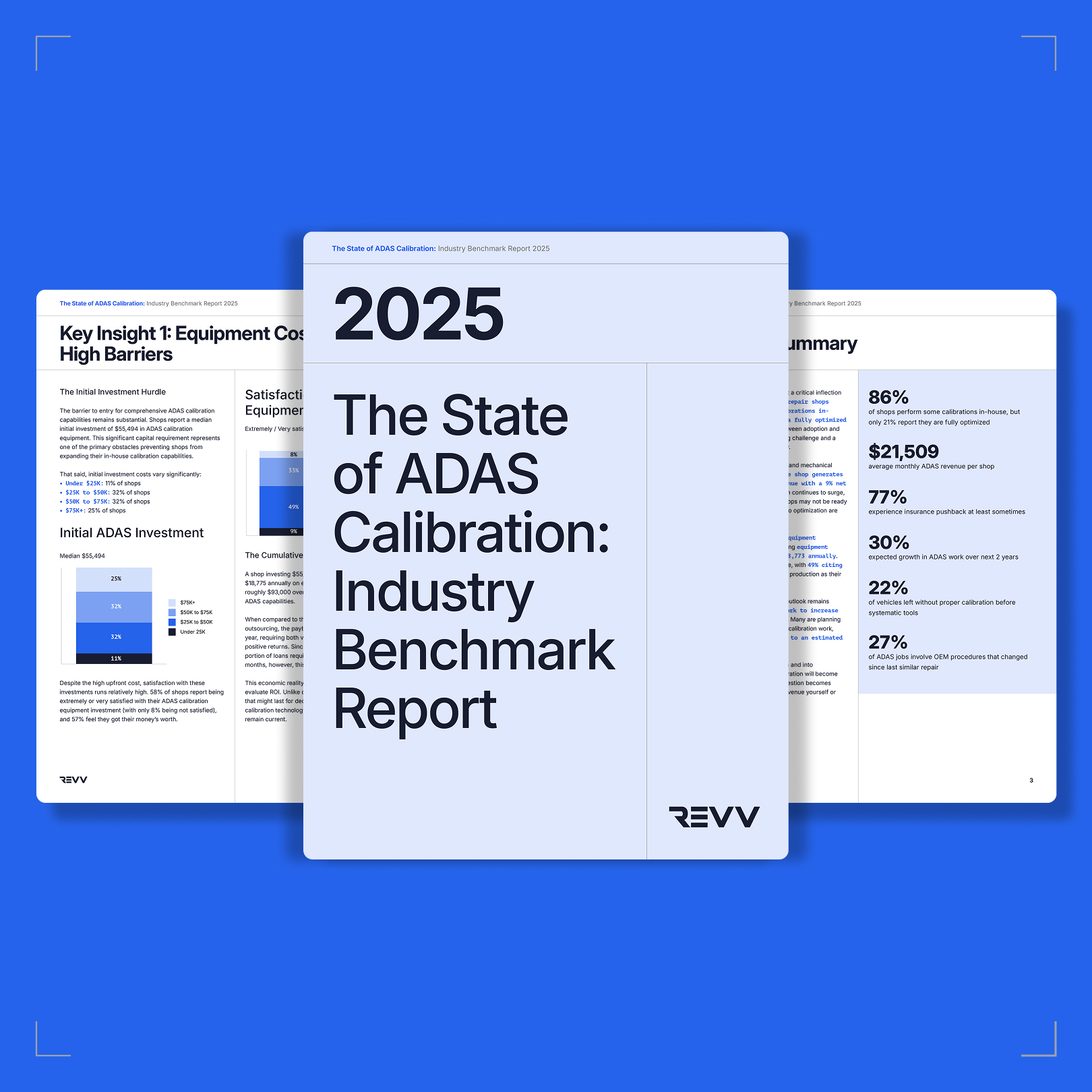
While 86% of shops perform some ADAS calibrations in-house, only 21% report having a fully optimized calibration process. That gap between adoption and optimization is costing shops time, money, and confidence—especially as OEM requirements change faster and insurers demand more documentation.
What's Inside the Report
In this free industry benchmark, you'll learn:
- How much revenue ADAS calibration actually generates
Shops report an average of $21,509 per month in ADAS revenue, with a 9% net profit margin. - The true cost of building in-house calibration capabilities
The median initial ADAS equipment investment is $55,494, with ongoing annual tooling and software costs averaging $18,773. - Why training is the biggest barrier to growth
59% of shops say better technician training would make them more likely to bring additional calibrations in-house—yet procedures change so often that training quickly becomes outdated. - How technology fragmentation slows down operations
Technicians are forced to juggle multiple platforms for OEM procedures, documentation, and updates—adding up to an hour per job when handled manually. - What insurers actually require for ADAS reimbursement
77% of shops experience insurance pushback at least sometimes, creating a growing documentation burden that directly impacts cash flow and investment decisions. - The hidden risk of missed calibrations
Before systematic identification tools, 22% of vehicles requiring calibration left shops without it, leading to rework, liability exposure, and customer dissatisfaction.
Why This Matters Now
ADAS-equipped vehicles already make up 44% of vehicles entering shops today, and repair facilities expect ADAS-related work to grow by 30% over the next two years. Shops that optimize now will be better positioned to capture that growth—while others risk falling behind due to inefficiency, missed requirements, and reimbursement delays.
This report gives you the data to:
- Benchmark your shop against the industry
- Identify hidden inefficiencies in your ADAS workflow
- Make smarter decisions about equipment, training, and software
- Reduce missed calibrations, rework, and insurance friction
Download the Free Report
Get the insights, benchmarks, and real-world data you need to build a safer, more profitable ADAS calibration operation.