Table of Contents
As ADAS calibration has become almost standard in the aftermarket, it’s unavoidable that some body shops may struggle to keep up with the demand due to business size or investment costs.
Whether or not shopowners plan on future ADAS investment, today’s calibration still needs a solution.
This challenge has led to the rise of mobile calibration providers. Our 2025 ADAS Industry Benchmark Report found that only 21% of shops report having a fully optimized ADAS process. Mobile calibration providers serve as a solution for the gap between ADAS abilities and calibration needs.
While shopowners weigh their options regarding the rising demand of ADAS calibration, they need a solution for the cars currently in their bay. This guide helps body shops understand how mobile calibration providers fit this need, and how to collaborate effectively with these partners.
What role mobile calibrators serve
To keep drivers safe, calibrating ADAS features requires a high level of attention to detail that ensures OEM compliance. For this reason, these calibrations typically occur in specialized locations with experts that guarantee accuracy and precision.
Shops can either choose to sublet their work to an off-site location, or bring a mobile calibration provider in-house.
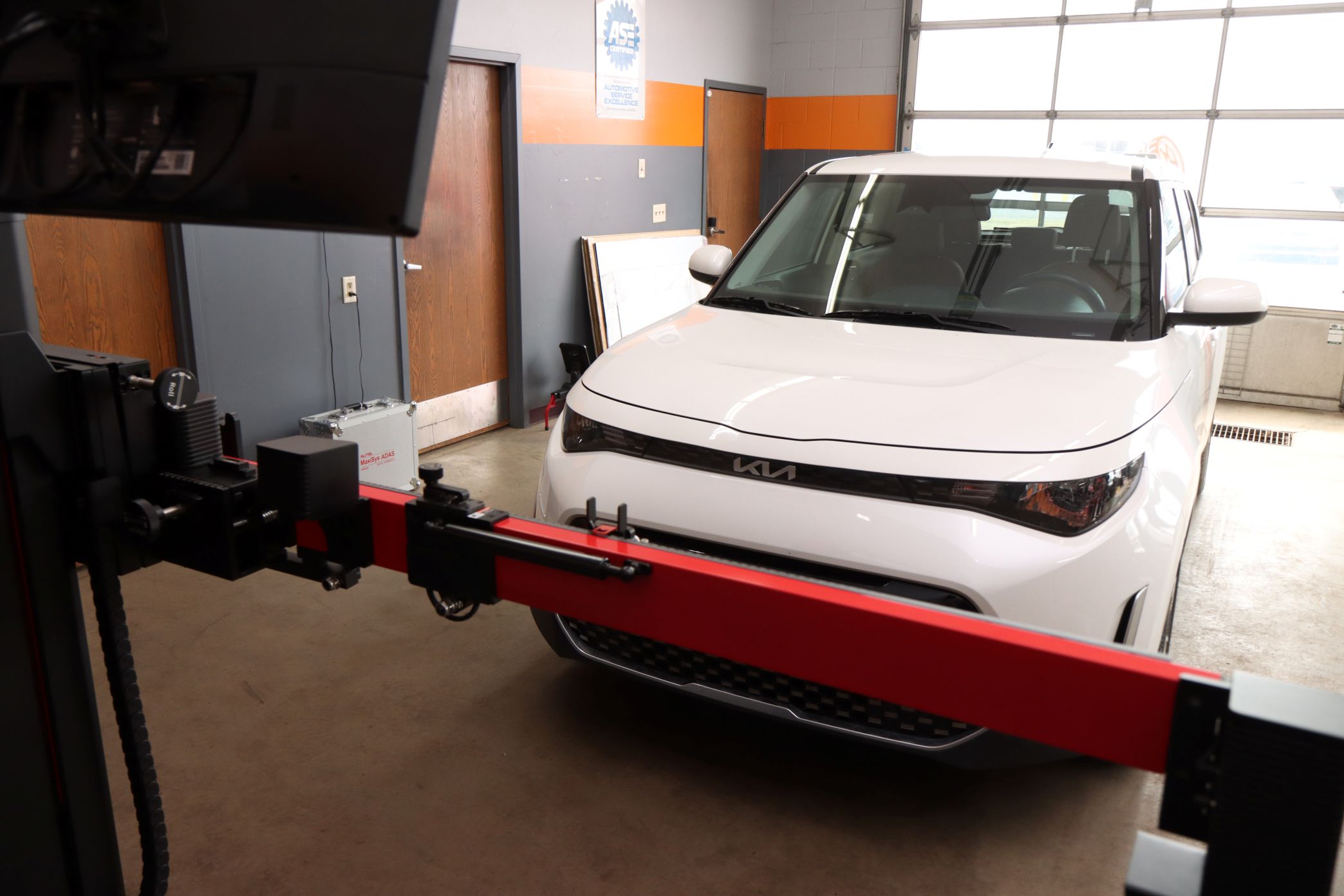
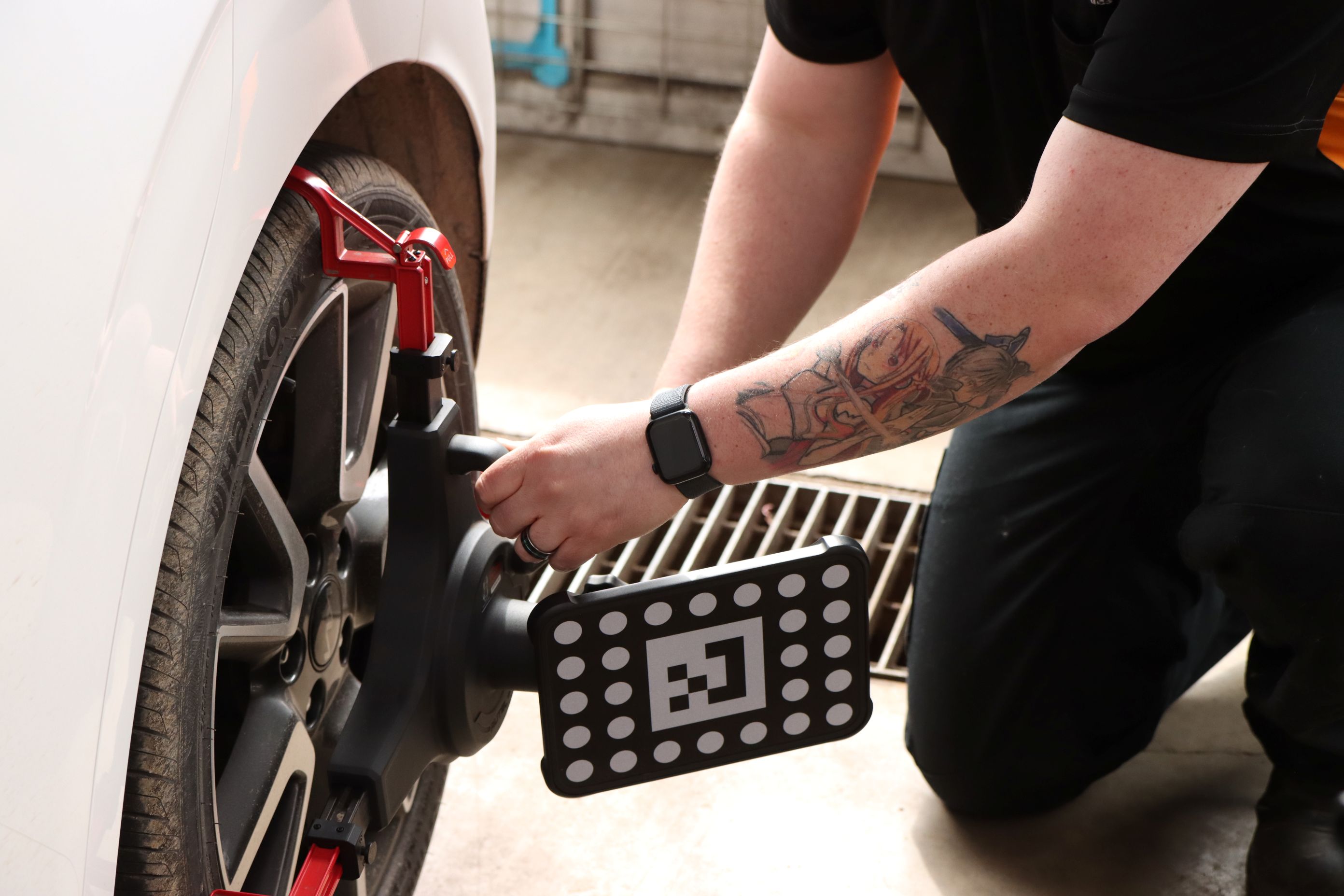
Mobile calibration providers are composed of expert techs and possess cutting-edge tools designed for servicing even the most recent ADAS components. These companies offer seamless and experienced ADAS service to shops that need it, in some cases right in their own facility.
When and why shops choose mobile calibration services
Shops choose to work with mobile calibration providers based on capability, confidence and convenience.
Not every shop has the equipment or technical expertise to perform 100% of ADAS calibrations in-house, which leads to the question: “Should I outsource or bring the service in-house?”
There’s no one-size-fits-all answer.
Sending a vehicle off-site can extend the amount of time you have a customer’s vehicle.
Choosing to bring someone in-house, if possible, avoids these concerns because the work is done in your bay.
If your shop is limited in its ADAS capability, yet you want to retain control of the process and scheduling, choosing to work with a mobile calibration provider offers a reliable solution that keeps you compliant.
How to choose the right mobile calibration partner
You want to work with providers that are capable of serving what you need.
You should choose partners that have:
- Certified and experienced technicians
- Look for providers that require their techs hold an ADAS-specific certification, such as the ASE L4 or I-CAR’s ADAS Platinum Certification.
- OEM-compliant equipment and procedures
- Does this provider use the latest tools, software, and procedures? OEM guidelines changes quickly, you want a partner that stays up-to-date
- Versatile skills and ability to service wide range of manufacturers
- A provider equipped to handle any make and model is vital in today’s mix of vehicles
- Detailed documentation practices for insurance and liability coverage
- Documentation is what protects your shop, and also helps you get paid
- Schedule flexibility
- You want a shop that fits into your workflow. You should also ask about premiums for emergency work, short notice, etc.
- Solid industry reputation
- Ask around to see who else works with this provider and get their opinion
Choosing the wrong partner hurts your overall outcomes, turnover, and your bottom line. When it comes to compliance, you cannot afford to compromise.
Best practices for working together
Once you’ve crafted your short list of local mobile calibration providers, the next step is to narrow down based on what cultivates a successful business relationship.
A work environment that promotes cooperation is conducive for both parties to remain content in the arrangement beyond financial reasons.
Mutual respect and communication and common business practices that are important in any partnership. These traits extend to sharing all relevant details, clear scheduling needs and restraints, and upholding contract guidelines.
Between body shops and mobile calibration providers, there are other needs that must be met to establish and foster a successful and long-term business partnership.
Let’s look at the most common practices that strengthen your work with mobile calibration providers.
Compliance, liability, and documentation
When both parties understand and respect the importance of OEM procedures, outcomes are improved. ADAS calibration brings legal and safety implications, so basing a partnership around this is a must.
In practice this looks like:
- Both parties keep clean record keeping and expect the same of the other
- Clearly defined responsibilities
- Ability to communicate transparently with customers and with each other
- Uncompromising dedication to OEM guidelines
Centering these principles is key to remaining compliant and reducing liability exposure. ADAS calibration opens the door for liability exposure, so maintaining standard operating procedures for both calibration and documentation helps protect your shop and the provider.
ADAS space requirements: Prepping your shop for your mobile partner
If calibrations are being done at your shop vs at a centralized calibrator location, it’s important that it’s ready to handle them.
ADAS requires very specific environmental controls and taking some of the workload off of your provider saves time and establishes good rapport.
Instead of leaving a bay messy and having the provider clean and organize the space, you can take simple steps to prep it, including:
- Use the bay with a level floor, optimal lighting, and minimal interference
- Clean and organize the space
- Provide all scan reports you used to diagnose
- Ensure the vehicle is ready with the proper tire pressure, fuel level, etc.
This step goes a long way toward improving your own turnover time and saves you money, as less of their billable time is used prepping the space.
Common challenges and how to avoid them
Some common pitfalls can hinder your relationship with a mobile calibration provider. These challenges present frustration for both sides, and in many cases are easily avoidable. These include:
- Incomplete repairs before calibration
- Miscommunication on vehicle condition
- Delays due to missing replacement parts or OEM data
When data is incomplete, diagnoses are incorrect, or vital pre-calibration steps are missed, time is wasted for both parties and leaves providers feeling disrespected. Their time is just as valuable as yours, and they have other clients to service after you.
Even one scenario that wastes a provider’s time is enough to change perspectives. Often, one mistake can outweigh many positives.
Cost considerations and ROI
What you must keep in mind is the cost of outsourcing ADAS work when compared to investing in equipment and training to bring it in-house. Using mobile providers works until it doesn’t. For some, that day may never come—and that works just fine.
For others, there are signs that you are ready to bring more ADAS in-house, including:
- Increasing ADAS volume
- Repeated scheduling delays with providers
- Growing supplements tied to calibrations
- Margin loss from outsourced work
ADAS is soon to be standard with the coming FMVSS 127 regulation. The decision will shift from “Who should I work with?” to “What do I invest in first?”
Throwing money at the most expensive ADAS tools without an implementation plan is just as detrimental as doing nothing. If you’re thinking about investment, then you need a plan built for where you are in your ADAS operation.
ADAS isn’t going anywhere, neither is calibration. Make sure your shop is prepared.
As ADAS grows and you want to remain in control of your workflow without high investment costs, you need to build a long-lasting relationship with one or more mobile calibration providers.
Revv not only identifies proper OEM guidelines, and autogenerate complaint documentation, it can also track progress w/ whatever party is responsible, whether your own team or an external calibrator.
Not sure where your shop stands?
Start by taking Revv’s ADAS Maturity Curve Assessment provides an answer. You’ll get a clear and personalized view of what to prioritize as you build your ADAS capabilities.