Table of Contents
Post-repair safety inspections: Tools that ensure ADAS accuracy
The repair is done. The panels are straight and the paint is matched. But are the safety systems that could save your customer's life actually working?
ADAS sensors don't always announce when they're misaligned, meaning, there’s likely no warning light or DTC. The vehicle drives normally, the customer leaves, and a safety system fails silently until it matters (or annoys them with random beeps, vibrations, or sudden stops).
A test drive and a visual check aren't enough. Neither is a diagnostic scan alone, since those only catch DTC-based errors and not misalignment.
Effective post-repair inspection requires layering the right tools in the right sequence. Here's what that looks like.
OEM procedure identification
Knowing what calibrations are required is the foundation of any accurate post-repair inspection.
This is also where shops most commonly fall short. OEM requirements are vehicle-specific, model-year-specific, and subject to change. According to Revv's 2025 Industry Benchmark Report, 27% of ADAS jobs involve OEM procedures that changed since the last time a technician performed a similar repair.
Third-party identification tools are useful starting points, but industry research has found significant gaps between what these tools report and what OEM procedures actually require. In one documented case, a repair requiring 11 calibrations was identified as needing only four by two separate third-party tools. OEM verification remains non-negotiable.
Tools that help with OEM procedure identification include:
- Revv: Provides VIN-specific ADAS calibration requirements and current OEM procedures at the estimate stage, automatically identifying all required calibrations before the repair begins.
- I-CAR OEM Calibration Requirements Search: Allows shops to identify which systems a specific make and model may be equipped with, and when calibrations are required.
- ALLDATA Collision: Includes an ADAS Quick Reference tool that links directly to vehicle-specific ADAS components and displays calibration information, required tools, and prerequisites sourced directly from OEM repair information.
Diagnostic scan tools
Pre- and post-repair scans are the baseline of any verification workflow. A pre-scan establishes which systems were affected before the repair began, while a post-scan confirms all codes have been resolved and no new issues were introduced. Shops should document both in a format that can be retrieved if a claim or dispute arises later.
Several states now require documented pre- and post-repair scans, and with 77% of shops experiencing insurance pushback on ADAS charges at least sometimes per Revv’s benchmark report, this documentation is increasingly essential for claims processing.
Diagnostic platforms with strong ADAS coverage include:
- Bosch ADS X Series: Updated monthly, with coverage now extending to 2026 model year vehicles and expanded ADAS calibration capabilities across Fiat, Volkswagen, RAM, Chevrolet, and GMC.
- asTech All-In-One: A comprehensive collision repair device covering over 45 OEMs, with bi-directional connection for clearing codes, programming modules, and performing both static and dynamic calibrations. Remote OEM technician access is available for complex repairs.
- Mitchell Diagnostics: Integrates scan and calibration reports directly into Mitchell Cloud Estimating, with Predictive ADAS (powered by ProTech) automatically generating calibration recommendations based on vehicle, scan, and estimate data.
- Opus IVS DriveSafe: Provides pre-scan, post-scan, OEM and multi-brand diagnostics, and ADAS calibration in one platform, with integration into tools like CCC.
Static calibration systems
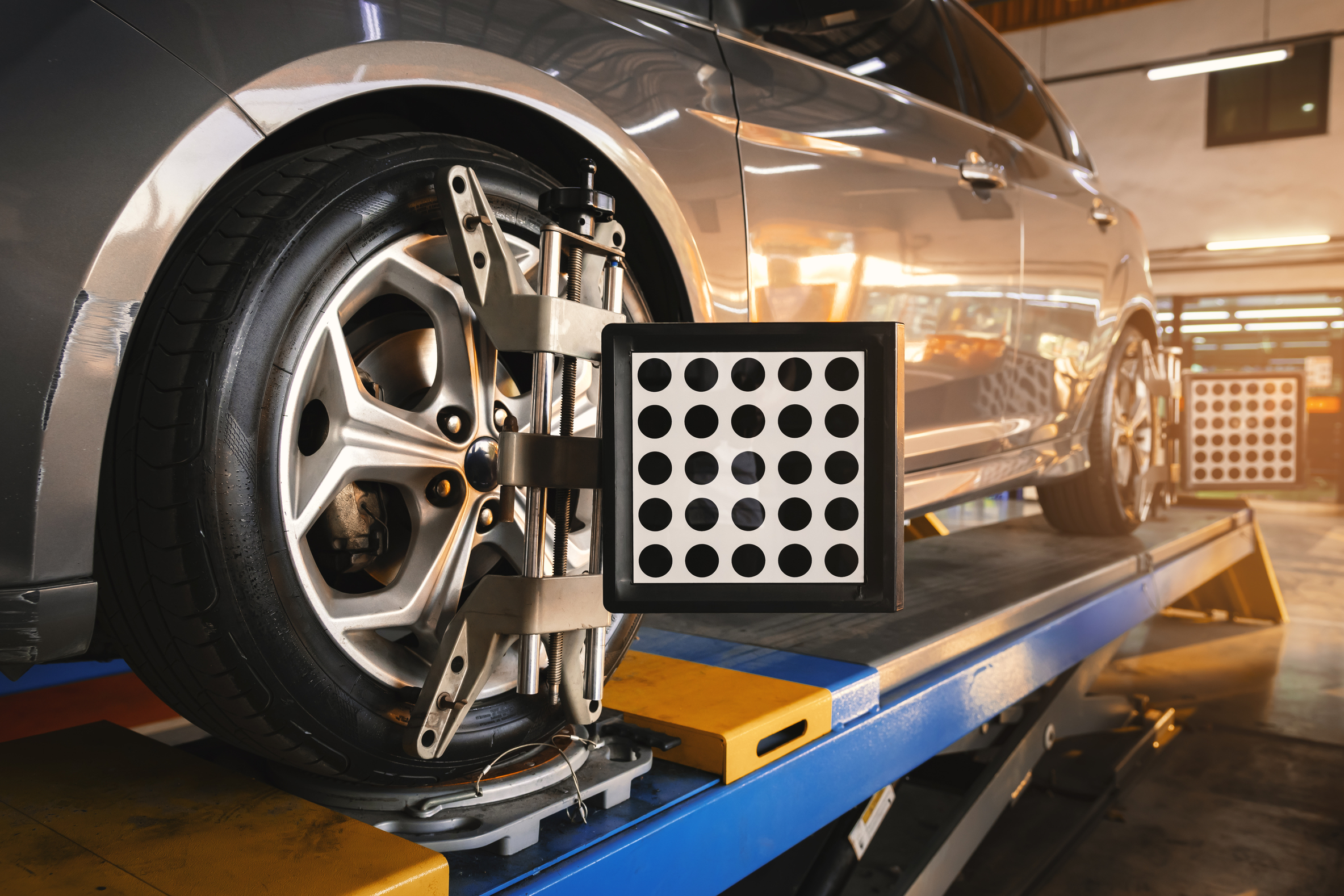
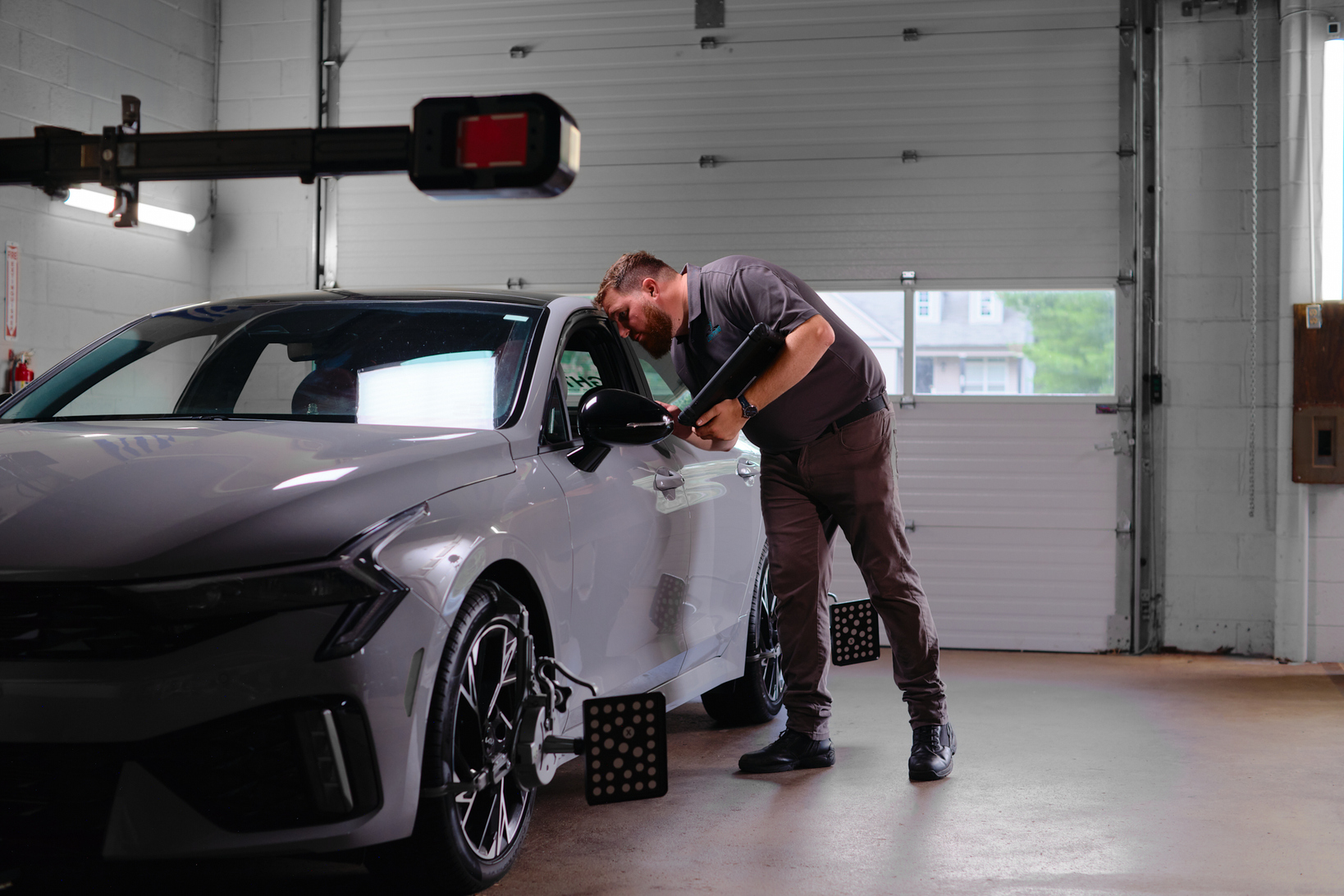
Static calibrations require the vehicle to be positioned in a controlled environment — level floor, adequate clearance, proper lighting — with calibration targets placed at precise manufacturer-specified distances and angles. The quality of the calibration is only as good as the setup conditions and target accuracy.
- Autel MaxiSYS ADAS / IA1000: Widely used in collision repair for near-universal vehicle coverage. The IA1000 offers robotic one-step forward-facing target positioning, automated frame alignment, and digital targets with adaptive illumination. Includes comprehensive pre- and post-scan reports that document and validate each calibration.
- Hunter ADASLink: Integrates with Hunter alignment equipment and uses guided processes to walk technicians through required calibrations after a collision. Most forward-facing calibrations can be completed within 16.5 feet.
- John Bean Tru-Point: Uses camera technology and easy-to-place targets to check for ADAS-related alignment issues and perform accurate static calibrations.
- Mitchell MD-TS21: A computer-based target system powered by Bosch technology, with guided lasers replacing manual measurement tools and integrated OEM-specified target storage.
Dynamic calibration tools
Dynamic calibrations require driving the vehicle under specific conditions while calibration software monitors sensor performance in real time. These must be completed under the road and speed conditions specified by the manufacturer.
- asTech All-In-One: Handles dynamic calibrations without requiring targets or additional shop equipment.
- Autel MaxiSYS: Bi-directional controls test components like fuel pumps and windows.
- AirPro Diagnostics: Offers a remote model where brand-specialist technicians connect to the vehicle remotely to perform and verify calibrations, with findings recorded in the cloud and full reports delivered to the shop.
- Mitchell MD-600: Designed specifically to meet road test requirements for dynamic calibrations, with FCA Secure Gateway access for Jeep and Dodge platforms.
Optimizing your post-repair workflow to never miss a calibration
The right tools only work if they're used in the right order and tied to verified OEM procedures. A diagnostic scan that misses a required calibration, a static calibration performed in a non-compliant environment, or a procedure pulled from memory rather than current OEM documentation can produce a vehicle that appears repaired but isn't actually safe.
The shops getting this right are treating post-repair inspection not as a final step, but as something built into the repair plan from the first estimate. Every required calibration identified up front. Every procedure confirmed against current OEM documentation. Every result is documented before the vehicle leaves the bay.
Revv helps shops build this workflow by identifying VIN-specific calibration requirements at the estimate stage and generating the OEM-backed documentation that ties each completed calibration to the procedure it was performed to. That way, nothing gets missed and every job is defensible.
Book a demo to see how Revv fits into your post-repair inspection process and can help maximize your revenue.