Table of Contents
Your shop just completed a routine bumper replacement on a 2027 Ford F-150. The repair looks clean, the customer is happy… but did you stop to verify whether that truck's automatic emergency braking (AEB) system still meets federal performance requirements before it left your lot?
That question might not be top of mind for you today, but it will be unavoidable by 2029.
NHTSA finalized a new Federal Motor Vehicle Safety Standard in 2024 that will make automatic emergency braking—including pedestrian AEB—standard on all passenger cars and light trucks by September 2029. The rule, FMVSS No. 127, is one of the most significant federal safety mandates in decades.
This post explains what FMVSS 127 requires, why it matters for your shop, and what you should do right now to prepare.
What FMVSS 127 actually requires
FMVSS 127 requires AEB, pedestrian AEB, and forward collision warning systems on all new light vehicles. The rule sets performance standards and driver notification requirements for these systems.
And the performance bar is high.
The final rule requires vehicles to stop and avoid contact with a vehicle in front of them at speeds up to 62 mph, and AEB systems must also be able to detect and avoid contact with pedestrians during the day and at night at speeds up to 45 mph. The systems must also brake automatically up to 90 mph when a collision with a lead vehicle is imminent.
Notably, FMVSS 127 effectively requires systems to meet all specified performance criteria in every test scenario, leaving no allowance for failed tests, unlike some international AEB standards that permit a small failure rate.
The mandate covers virtually every vehicle your shop will see. FMVSS No. 127 applies to all passenger cars and to all multipurpose passenger vehicles with a gross vehicle weight rating of 4,536 kilograms (10,000 pounds) or less.
Compliance is required for all vehicles by September 1, 2029, with vehicles produced by small-volume manufacturers, final-stage manufacturers, and alterers having until September 1, 2030.
And critically for shops: although the final rulemaking focuses on vehicle manufacturers, NHTSA makes clear that alterers and other businesses that modify vehicles must not create a noncompliance with FMVSS 127. This directly implicates collision and repair work affecting AEB performance.
Why this changes everything for collision shops
NHTSA projects that FMVSS No. 127 will save at least 360 lives a year and prevent over 24,000 injuries annually. But the mandate also sets a new baseline expectation for what "properly repaired" means.
If a vehicle leaves your shop with an AEB system that no longer performs to federal standards because of how a repair was performed — or because a required calibration was skipped — your shop is exposed to liability.
Research has found that improper calibration not only jeopardizes road safety but also exposes service providers and vehicle owners to legal and regulatory risks.
One study testing a 2024 Nissan Altima found that no calibration of the lane departure warning system resulted in complete system failure, and that poor calibration introduced dangerous asymmetry — while good calibration fully restored factory-level performance.
The precision requirements for these systems are unforgiving, with modern ADAS sensor mounting points require ±1 mm precision. As a result, having the right equipment, technician training, and processes to properly identify and complete ADAS calibrations is critical.
The legislative landscape is still developing
While FMVSS 127 sets the mandate for vehicle manufacturers, clear guidance for repair shops on how to demonstrate compliance after a repair is still developing at the federal level.
The ADAS Functionality and Integrity Act (H.R. 6688) passed a House subcommittee in February 2026, moving closer to a floor vote. If enacted, it would direct NHTSA to create standardized calibration guidelines for vehicles with aftermarket modifications, giving collision repair shops a defined standard for demonstrating that ADAS systems remain functional after a repair.
Currently, collision repair shops and calibration centers have no federal guidance on what tolerances ADAS systems can withstand before recalibration is required. At a Collision Industry Conference panel in early 2025, multiple calibration center operators said they decline to calibrate modified vehicles entirely because OEM guidance is absent and the liability risk is too high.
In this environment, following OEM calibration procedures isn't just best practice, and as legislation increases, it's the only defensible standard shops have.
The calibration gap shops are already facing
The uncomfortable reality is that the industry is already falling behind on ADAS calibrations, and the volume of AEB-equipped vehicles hasn't even peaked yet.
An estimated 75% of required ADAS calibrations are currently missed in the collision repair industry. This is leaving money on the table and increasing your liability risk, all while letting customers leave with their vehicle’s critical safety features not functioning correctly.
Part of the problem is procedural. In the vast majority of cases, there will be no warning light on the dash and no fault codes, and estimating systems will almost never identify what calibration is needed. Manufacturers use different names for the same sensors, scatter calibration requirements across multiple sections of their service manuals, and update procedures without clear notification to independent shops. This makes it challenging for shops to know what needs calibration when different repairs come rolling in.
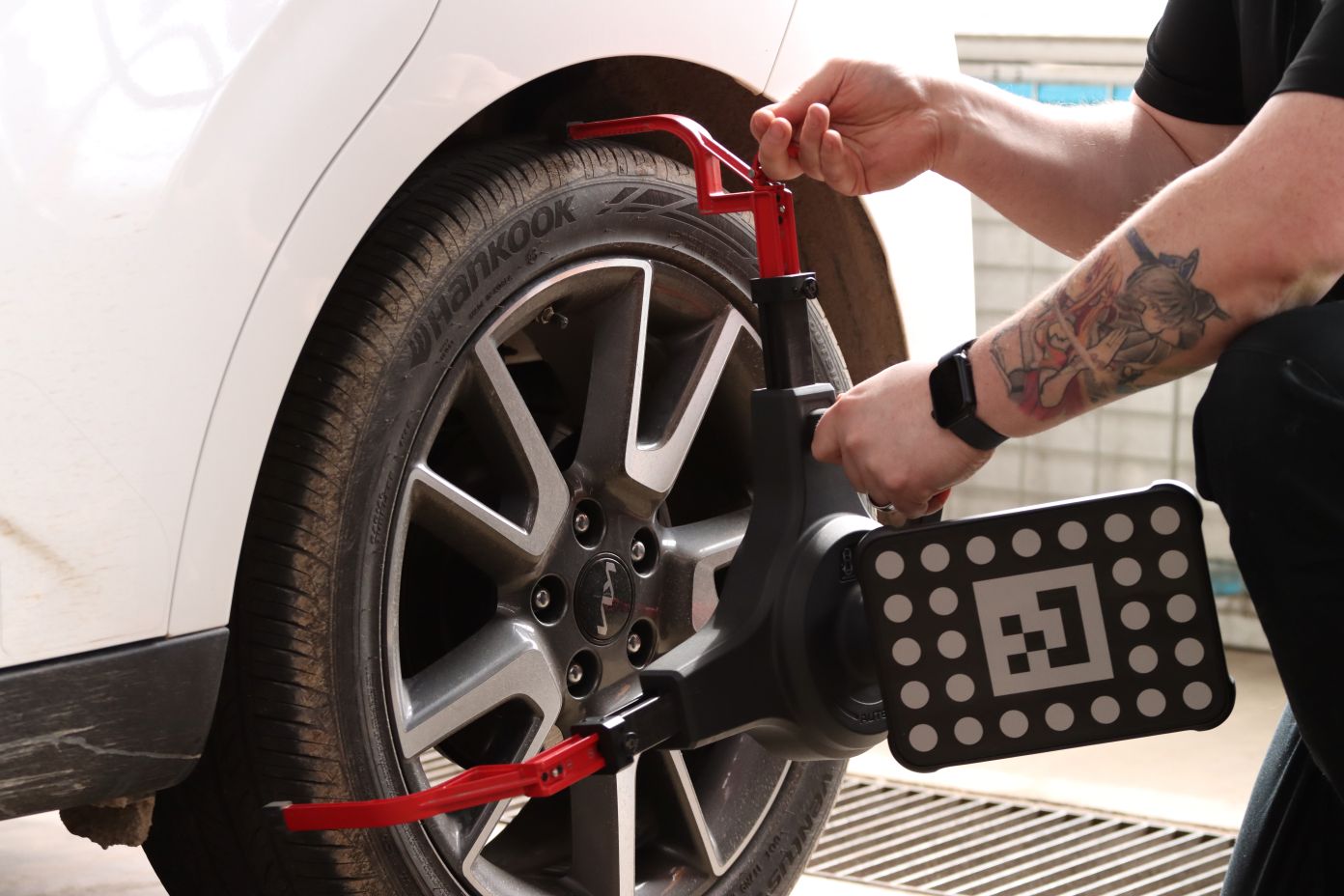
Part of it is also a training gap. Plenty of collision repair technicians were trained before ADAS became widespread in the 2010s, and some may not realize how easily these systems can be thrown off during seemingly routine repairs like replacing a bumper or performing a wheel alignment.
Shops need to take action now so they can accommodate the already significant number of vehicles with ADAS systems and so they can be ready for the new ruling in 2029.
What shops need to do before 2029
The shops that will be best positioned when model year 2029 vehicles begin arriving are those that start building their AEB calibration capabilities now — not the week the mandate takes effect.
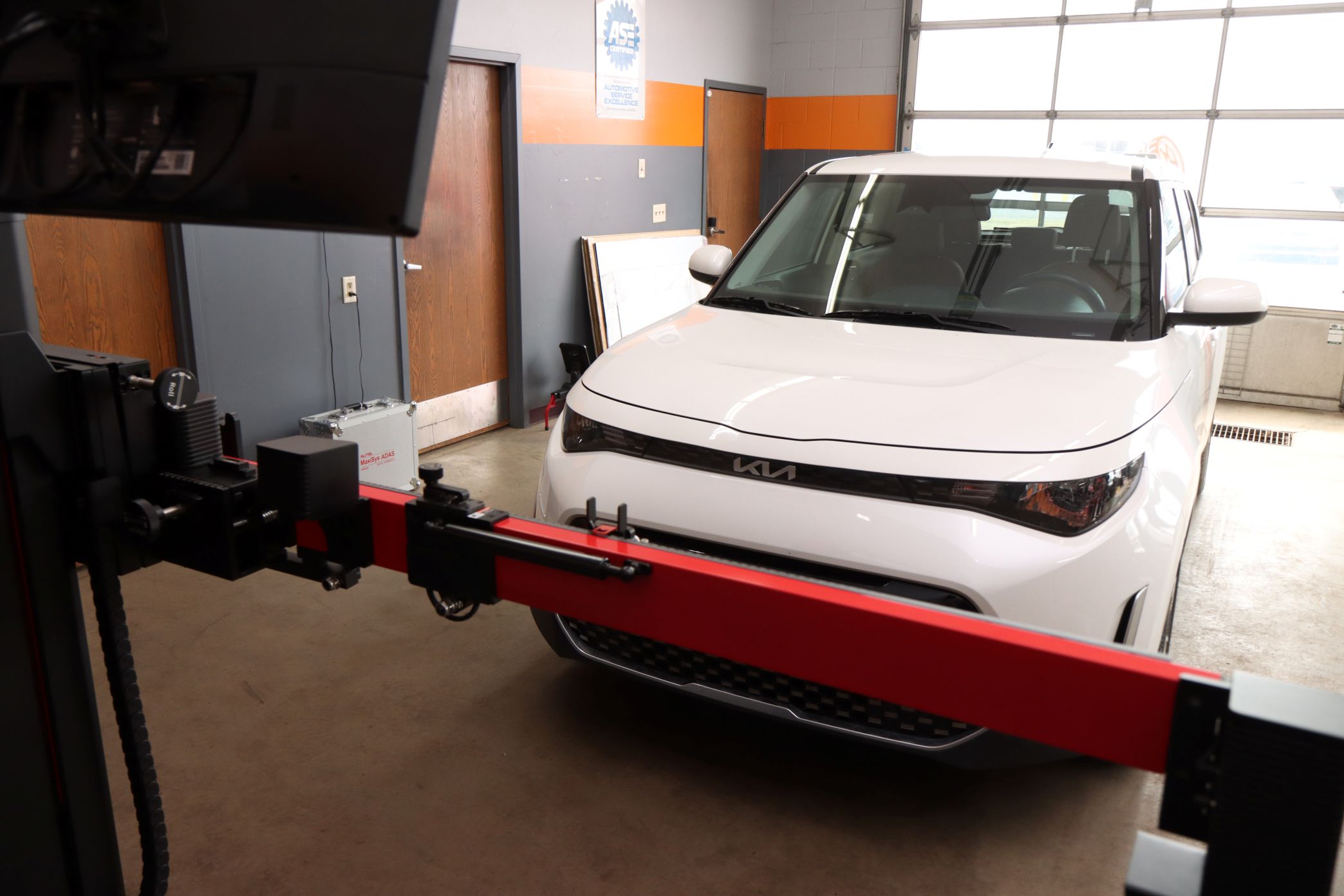
Assess your current capabilities honestly. Do your technicians know which repairs trigger AEB calibration requirements? Do you have the equipment and space to perform static calibrations in-house? Do you have documented relationships with calibration providers for dynamic procedures? These are gaps that take time to close.
Invest in training before the volume arrives. According to Revv's 2025 Industry Benchmark Report, 59% of shops say better training would make them bring more calibrations in-house. Technicians who build AEB calibration competency now will be significantly more valuable (and likely harder to find) as 2029 approaches, so start now.
Build calibration into your intake process. Identifying which repairs require AEB recalibration needs to happen at the estimate stage. Completing the proper diagnostics, determining which components might require calibration, and reviewing OEM repair procedures during initial assessment can help avoid added costs and repair time identified later in supplemental phases.
Document everything. According to our report, 77% of shops experience insurance pushback on ADAS charges at least sometimes. Documentation showing which OEM procedures were followed — including procedure version numbers and dates — is becoming essential for claims processing and liability protection.
The shops that start now will be ready when 2029 arrives
FMVSS 127 isn't a distant regulatory concern. Model year 2029 vehicles are already in the design and production pipeline. The shops, technicians, and insurers that will navigate this mandate successfully are those that treat AEB calibration (and ADAS calibrations overall) as a core competency instead of an afterthought.
Revv helps shops get ahead of this mandate by providing instant access to VIN-specific AEB and ADAS calibration requirements from multiple manufacturers. You’ll know exactly what each vehicle needs before the repair begins. Our platform identifies required procedures, documents compliance, and keeps you current as OEM requirements evolve.
Book a demo to see how Revv can help your shop build AEB as well as all ADAS calibration capabilities you'll need for 2029 and beyond.
.jpg)